This Place Meant: A Sound Pilgrimage of Kent’s Heritage (2026)
This Place Meant was an Arts Council England-funded pilgrimage of immersive sound, art, heritage and landscape experiences presented across 11 locations throughout Kent between December 2025 and June 2026.
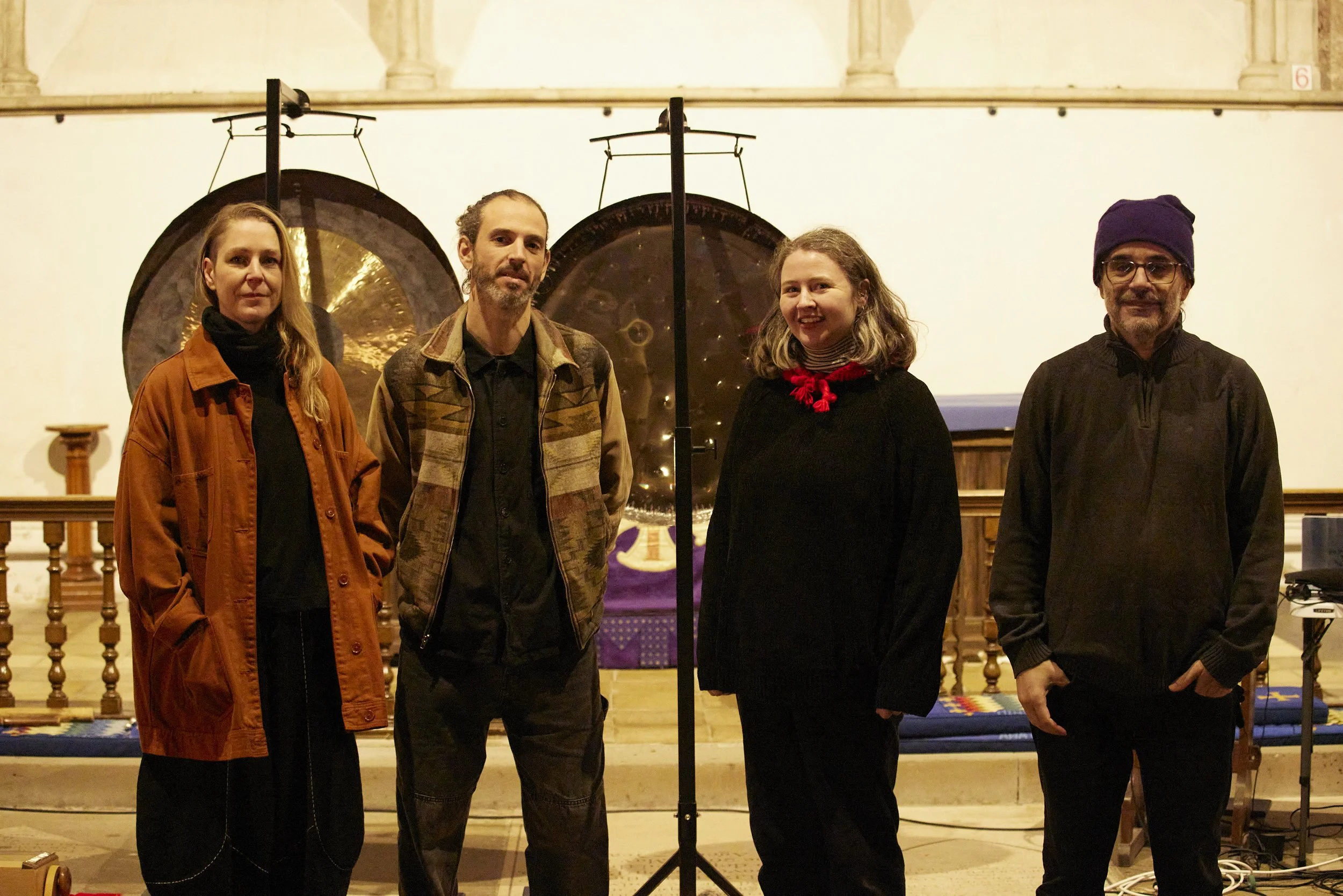
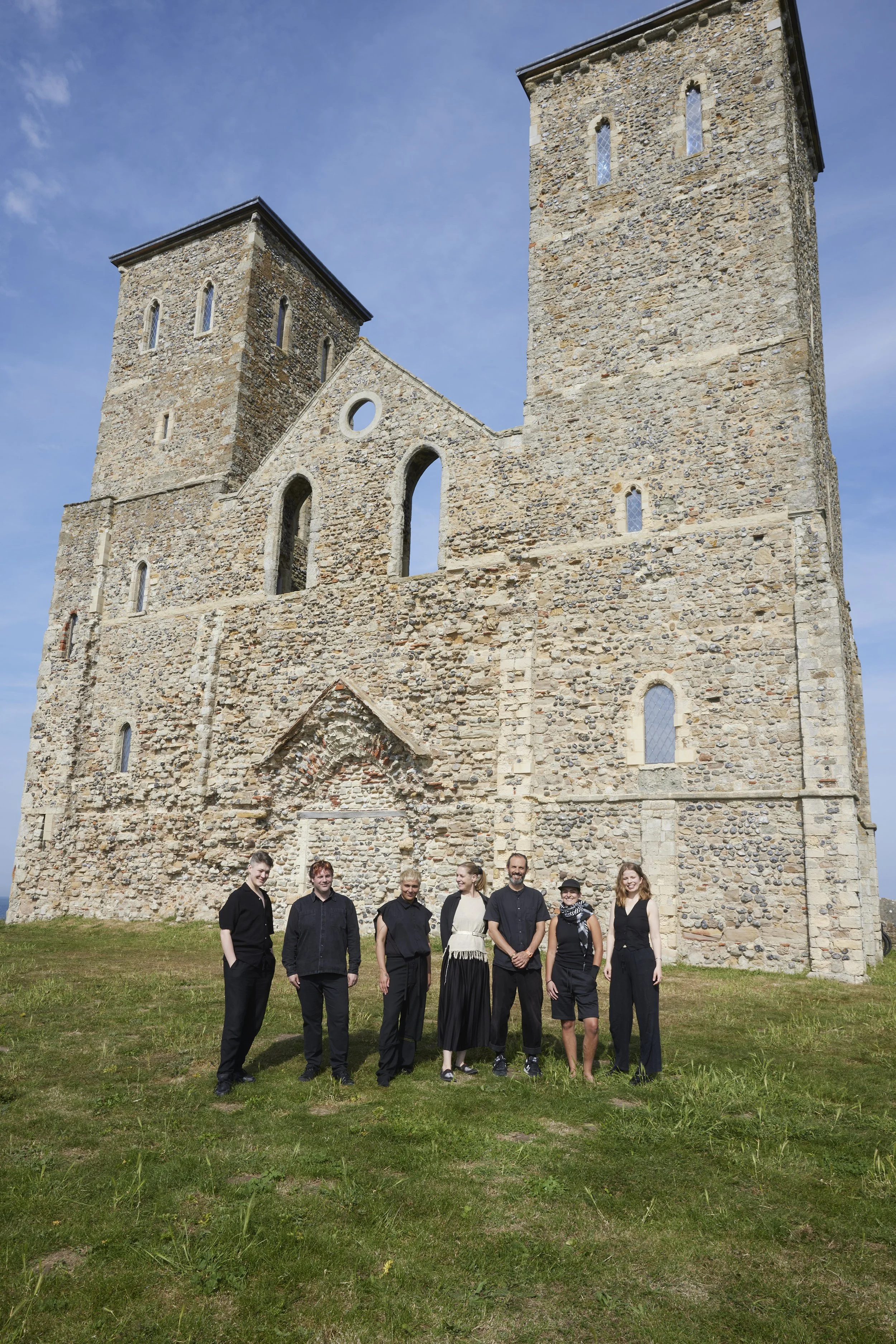
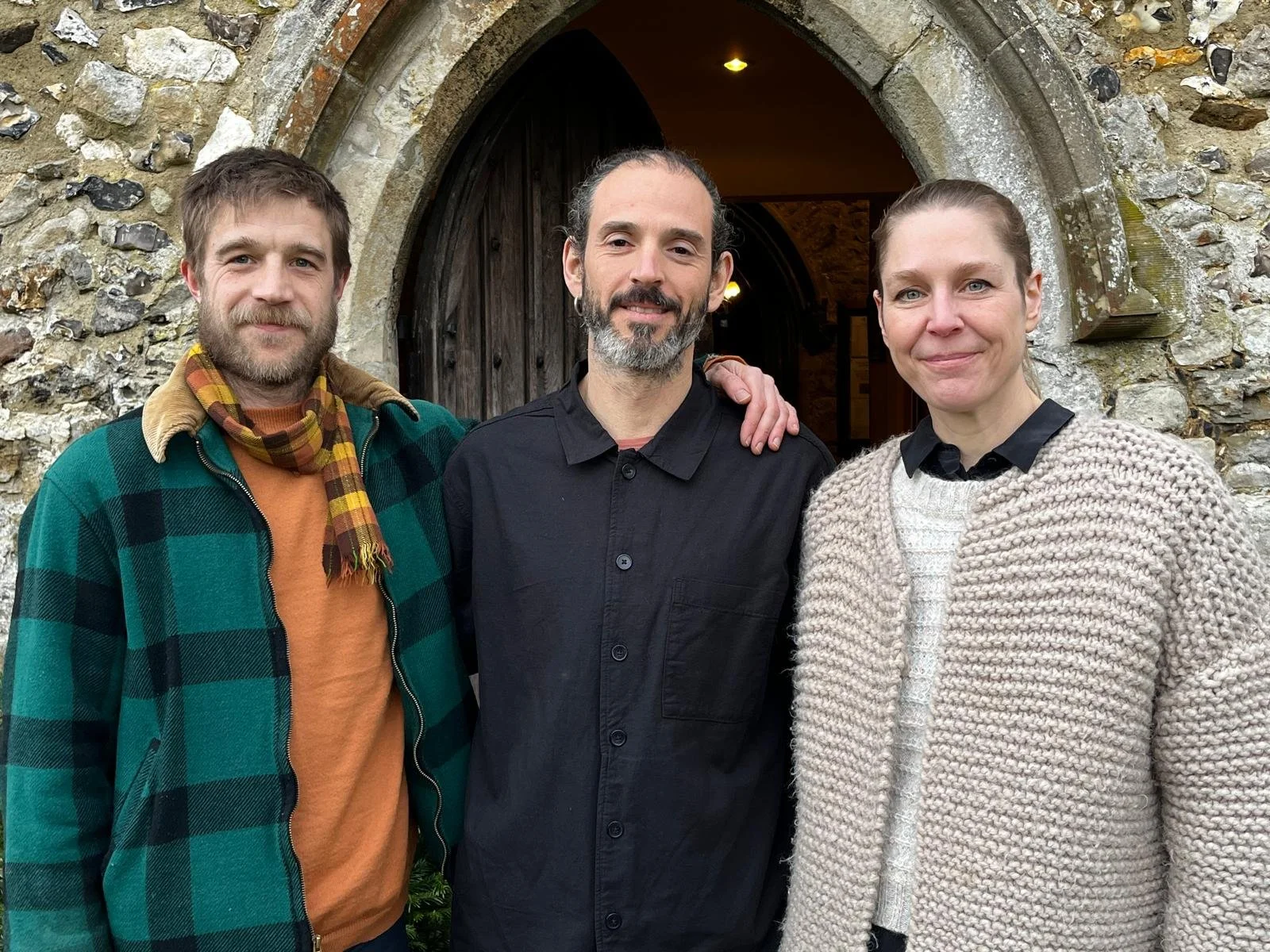
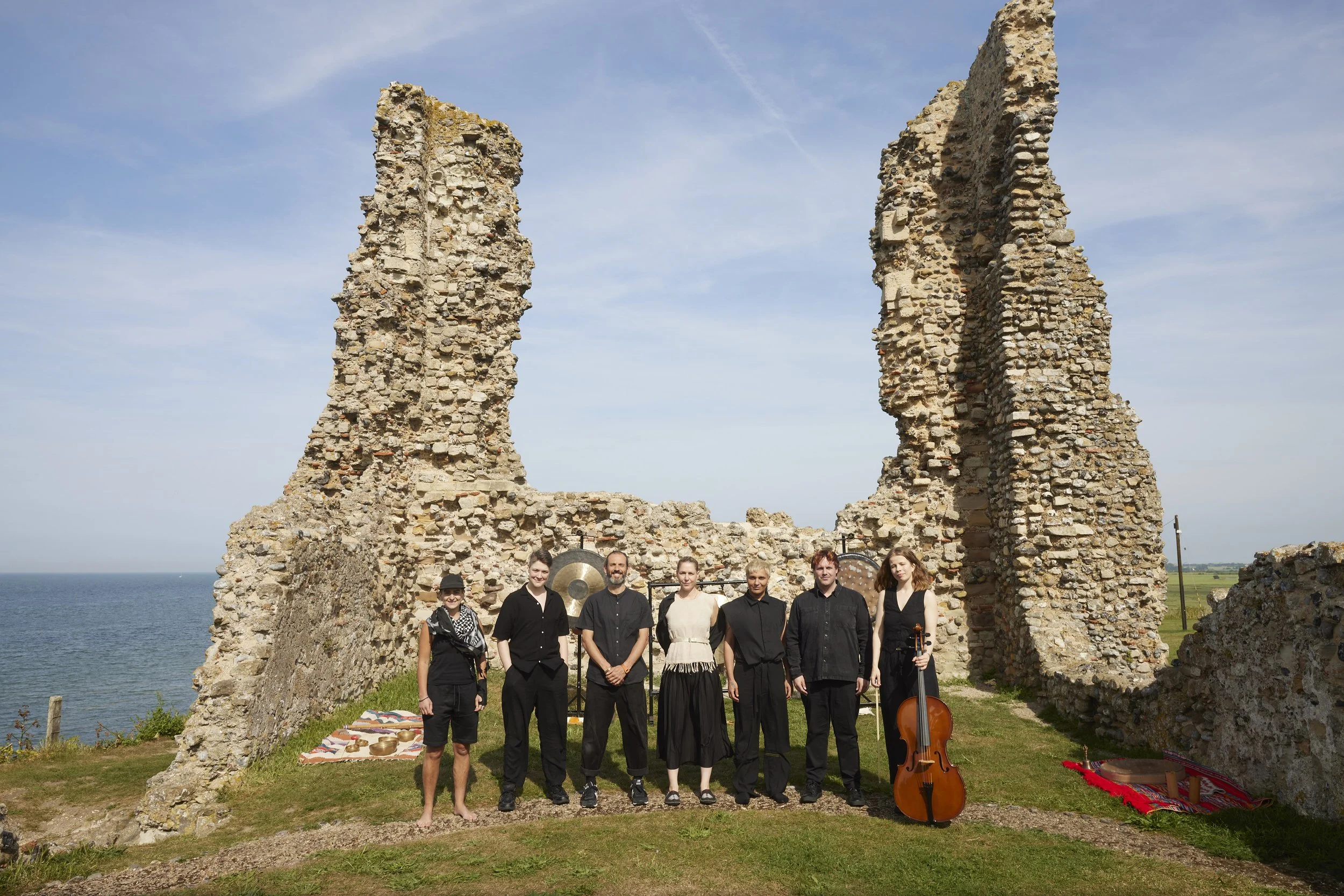
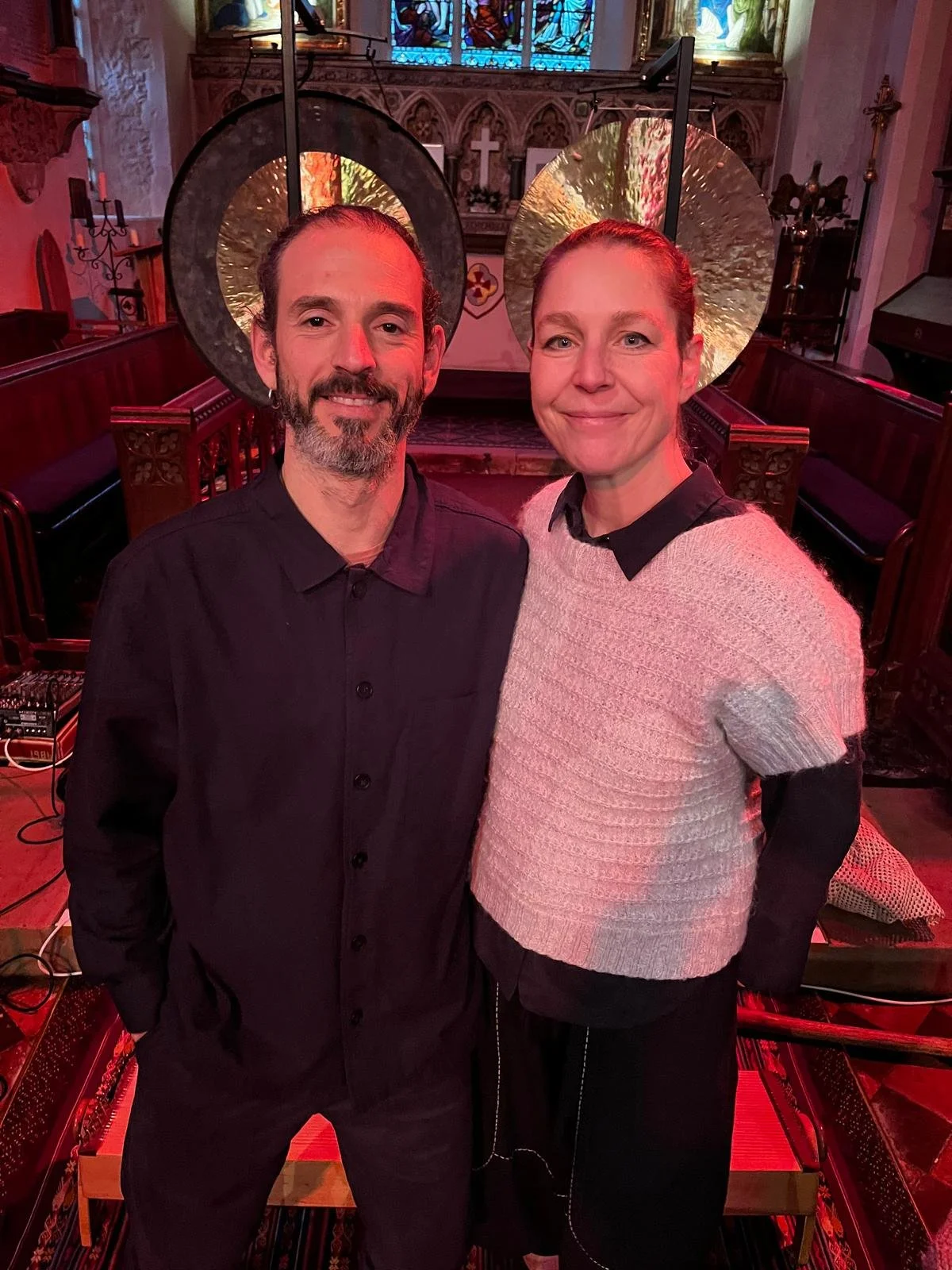
Created by Sound Emergence lead artists André Braga-Verissimo and Sasha Maye Bruce, the project brought together 17 artists from different disciplines and engaged more than 550 audience members. Building on the success of Church + Coast, it explored how places acquire meaning through pilgrimage, migration, work, memory and belonging -and how those meanings change depending on who encounters them.
The project was co-produced by artists Louise Webb and Didier Rochard.


Expanding the pilgrimage
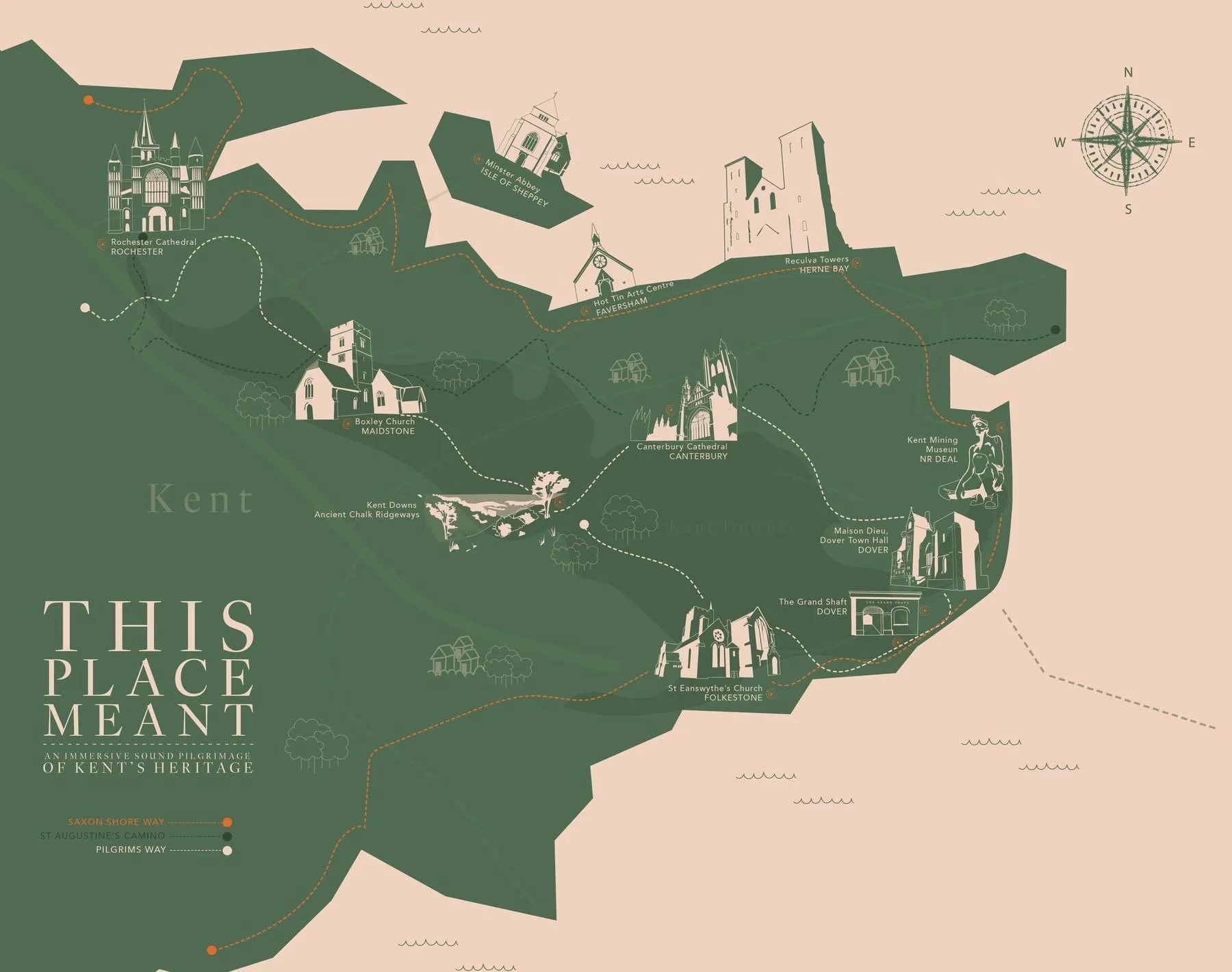
Church + Coast had followed the historic shoreline westwards from Folkestone through Romney Marsh to Winchelsea. This Place Meant expanded the journey northwards and eastwards, connecting sacred buildings, ports, defensive structures, former industrial landscapes, ancient routes and outdoor sites across Kent.
The project followed sections of the medieval Saxon shoreline, the Pilgrims’ Way and ancient pathways across the Kent Downs. Its locations revealed different relationships between people and the land: from churches and cathedrals associated with pilgrimage and sanctuary to chalk landscapes, coastal ruins, coal-mining communities and fortifications created to control movement across the English Channel.
The title reflected the project’s central question: what has a place meant to different people across time? Each destination offered a different perspective on movement, displacement, identity, welcome and belonging.
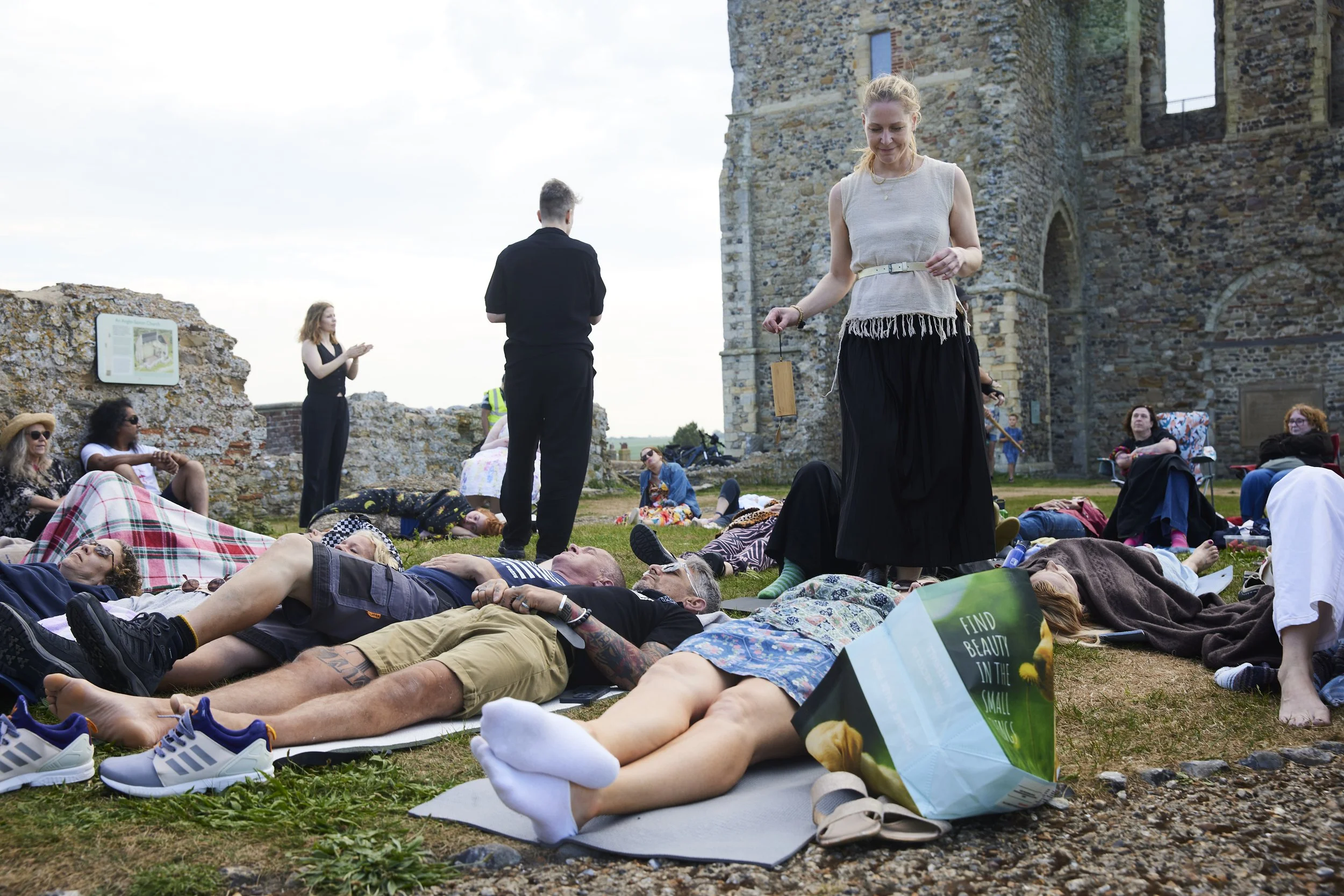
The pilgrimage visited: St Mary and St Eanswythe, Folkestone; Maison Dieu, Dover; St Mary and All Saints, Boxley; Minster Abbey Church, Isle of Sheppey; Kent Mining Museum, Betteshanger; St Martin’s Church, Canterbury; The Hot Tin, Faversham; The Grand Shaft, Dover; Rochester Cathedral; Reculver Towers; King’s Wood in the Kent Downs
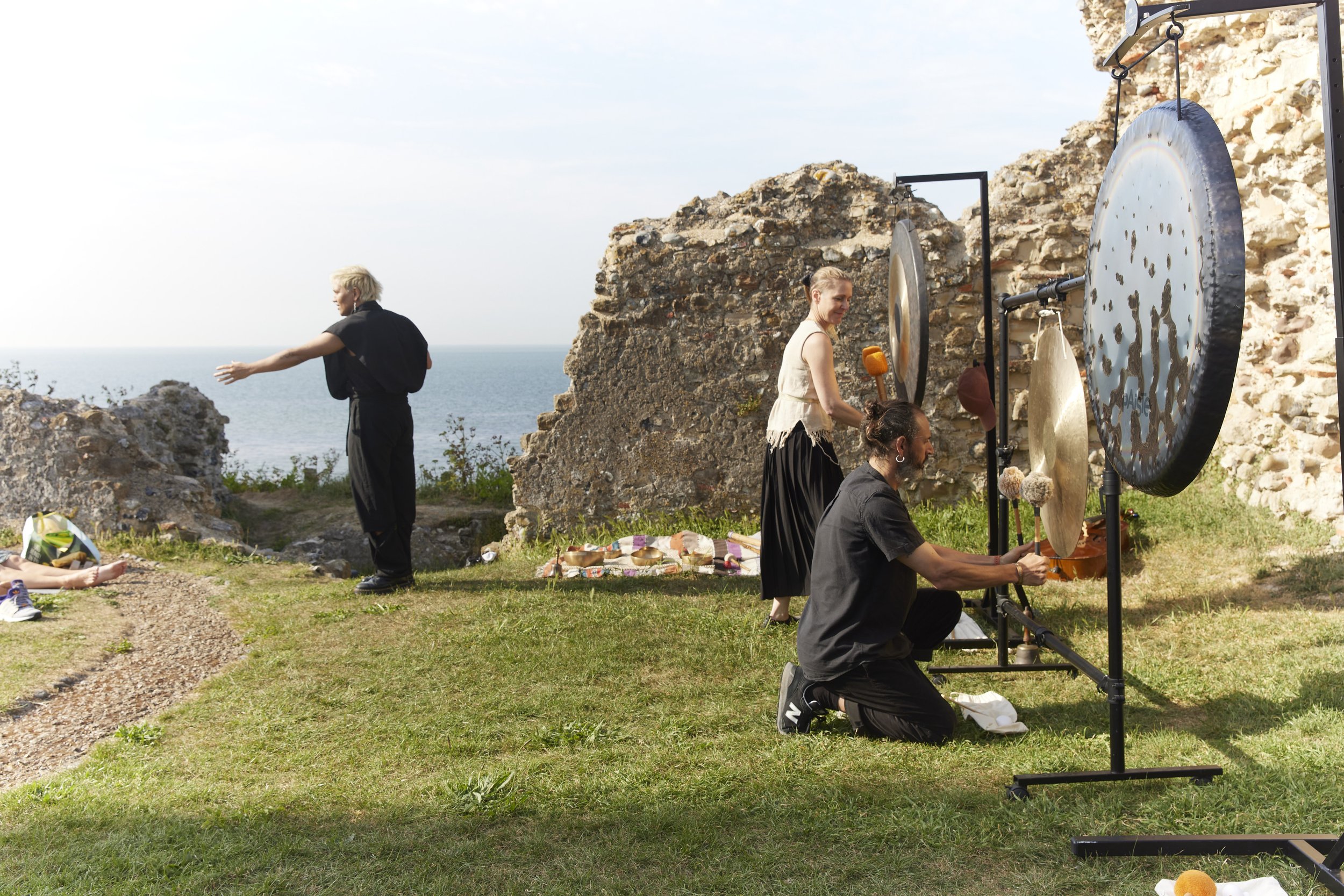
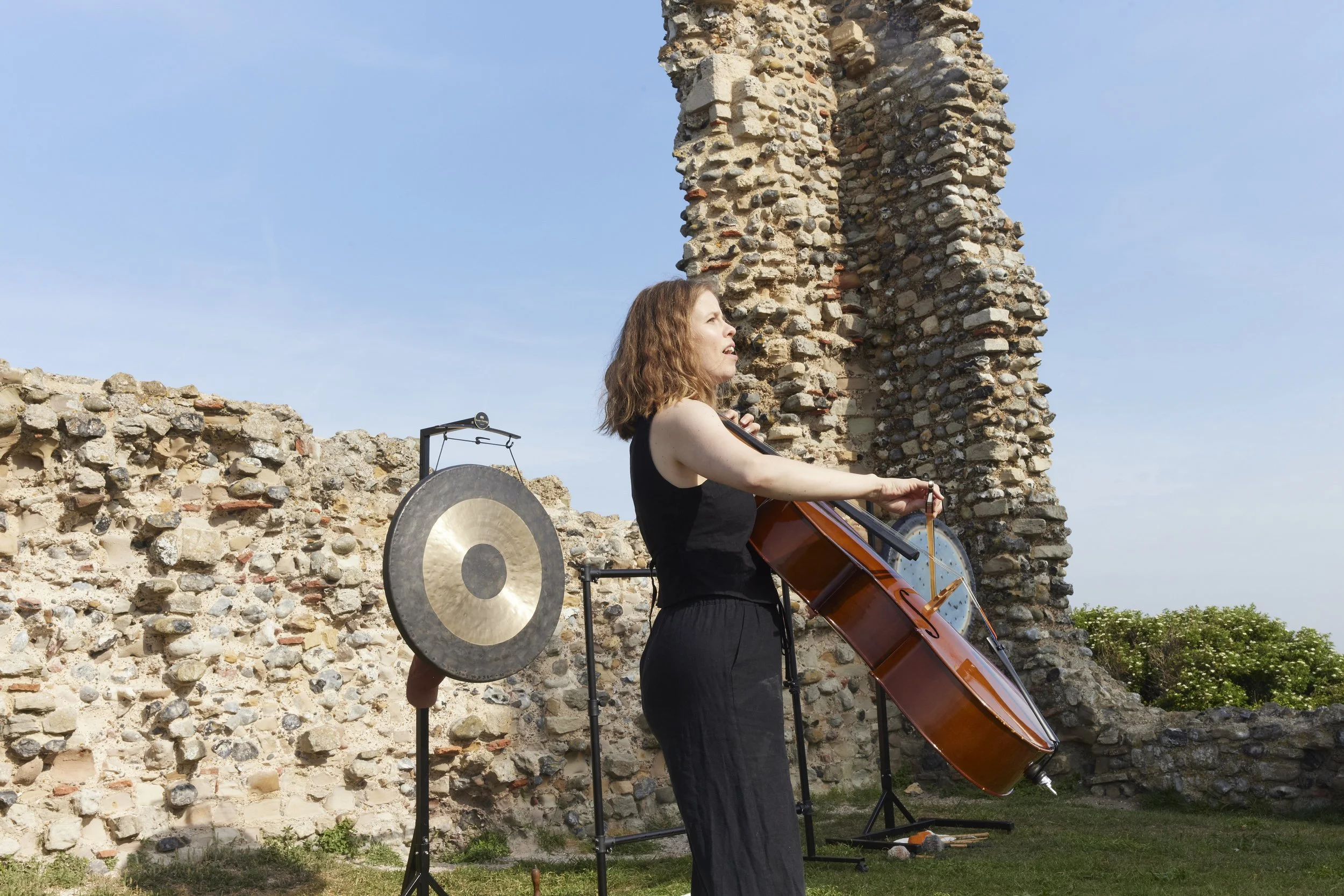
Ten of the 11 locations were new to Sound Emergence. Working outdoors for the first time also allowed the project to explore listening, walking and collective experience directly within the landscape.

Sound, art and collaboration
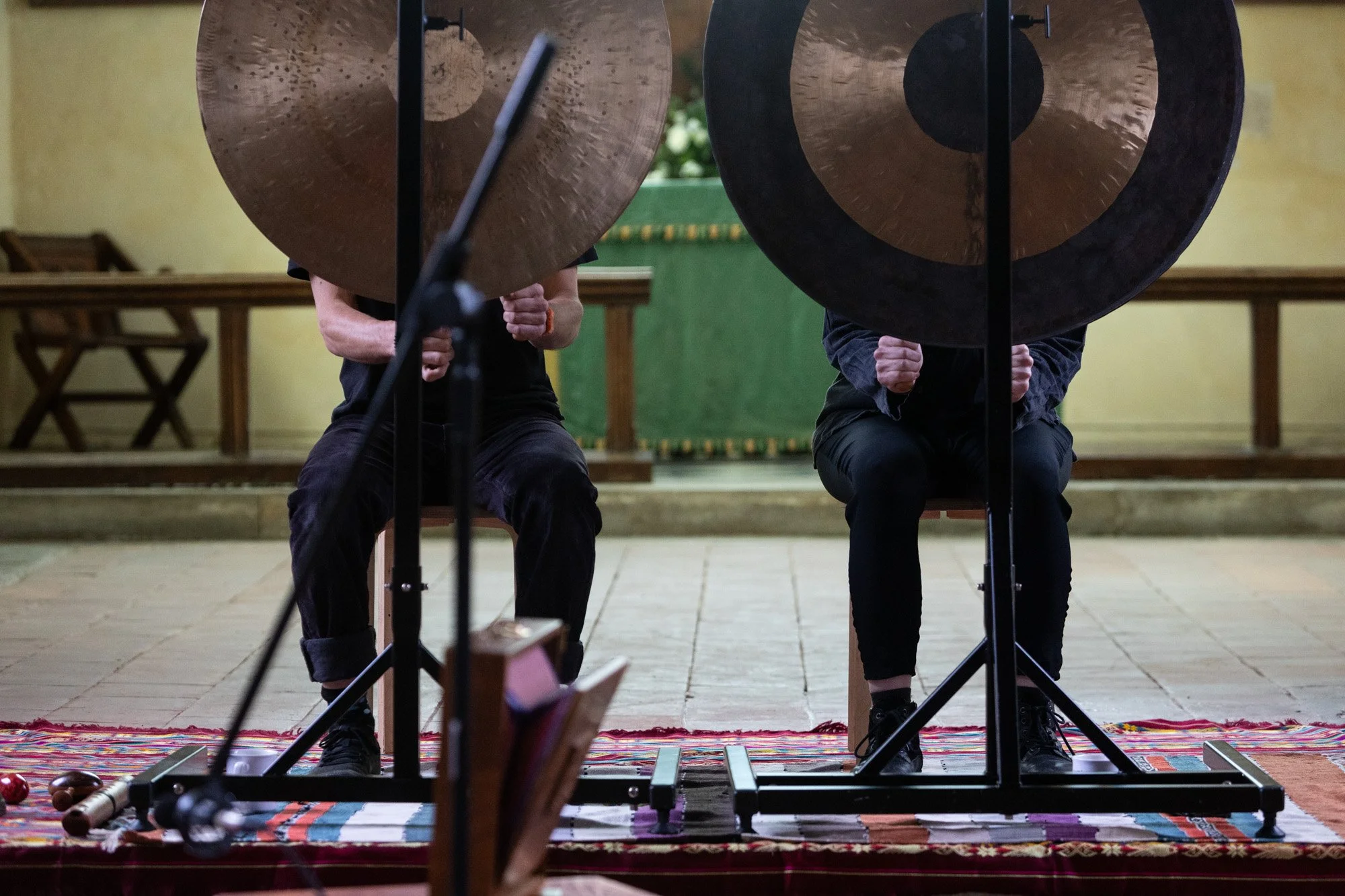
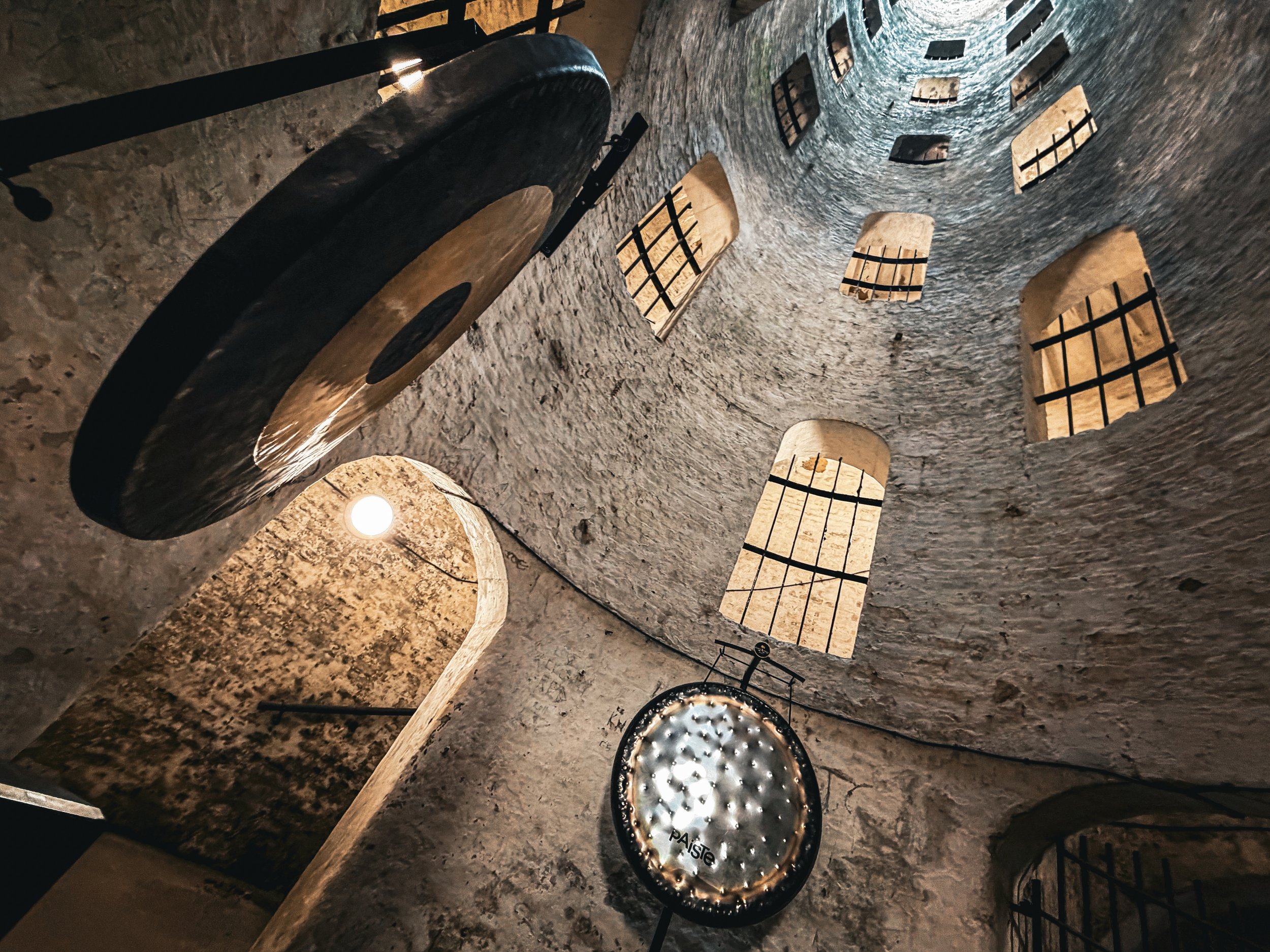
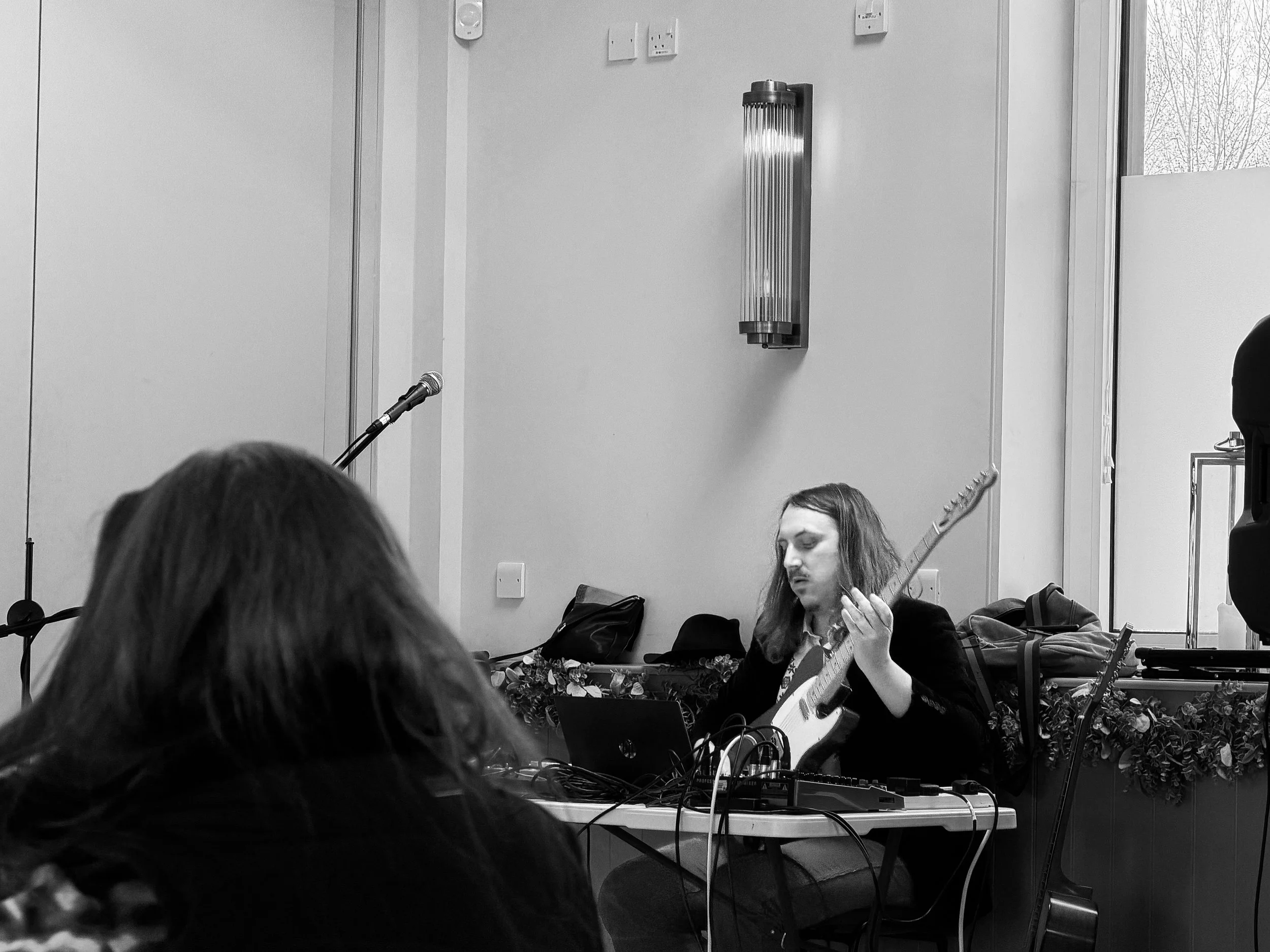
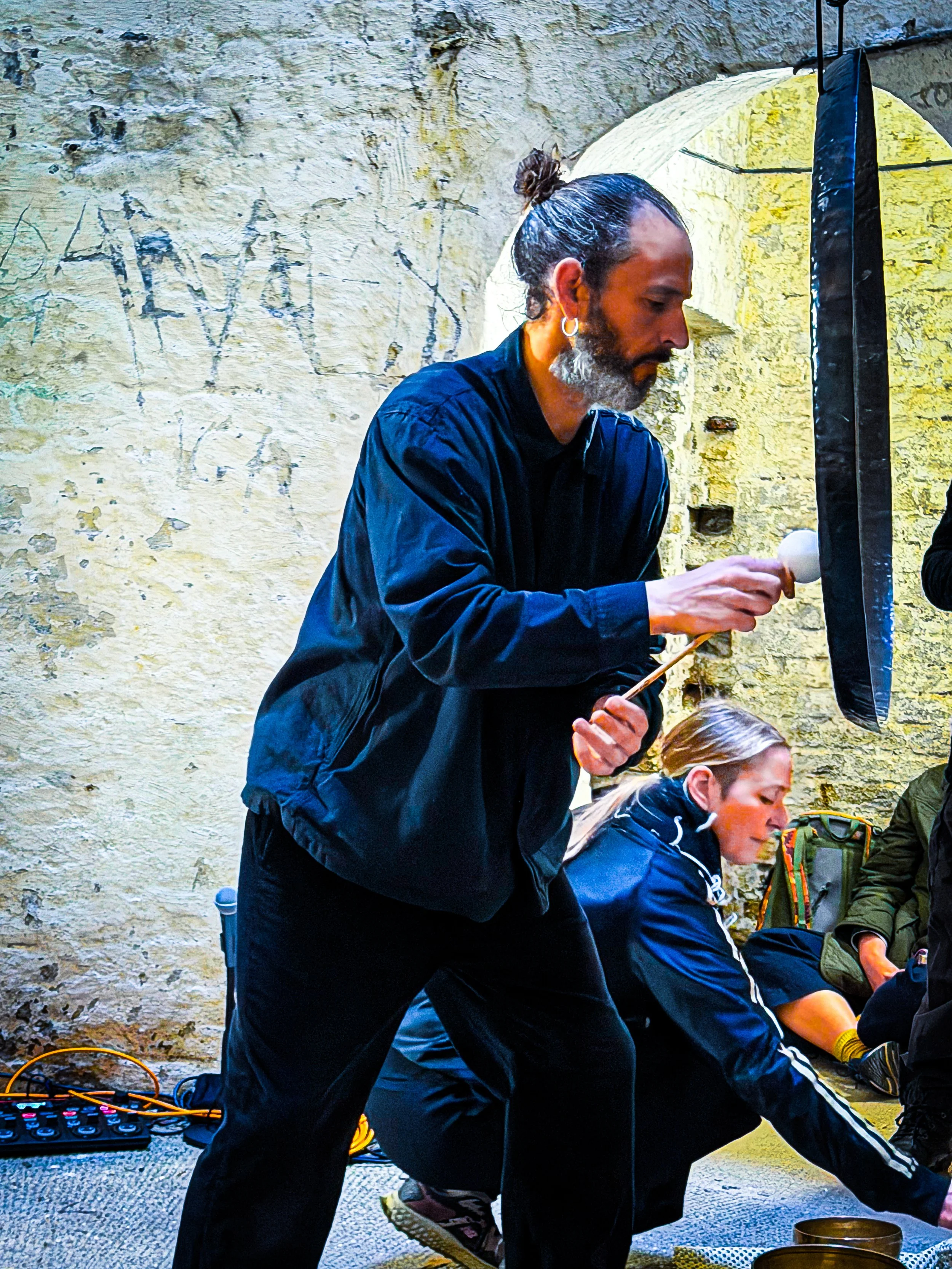
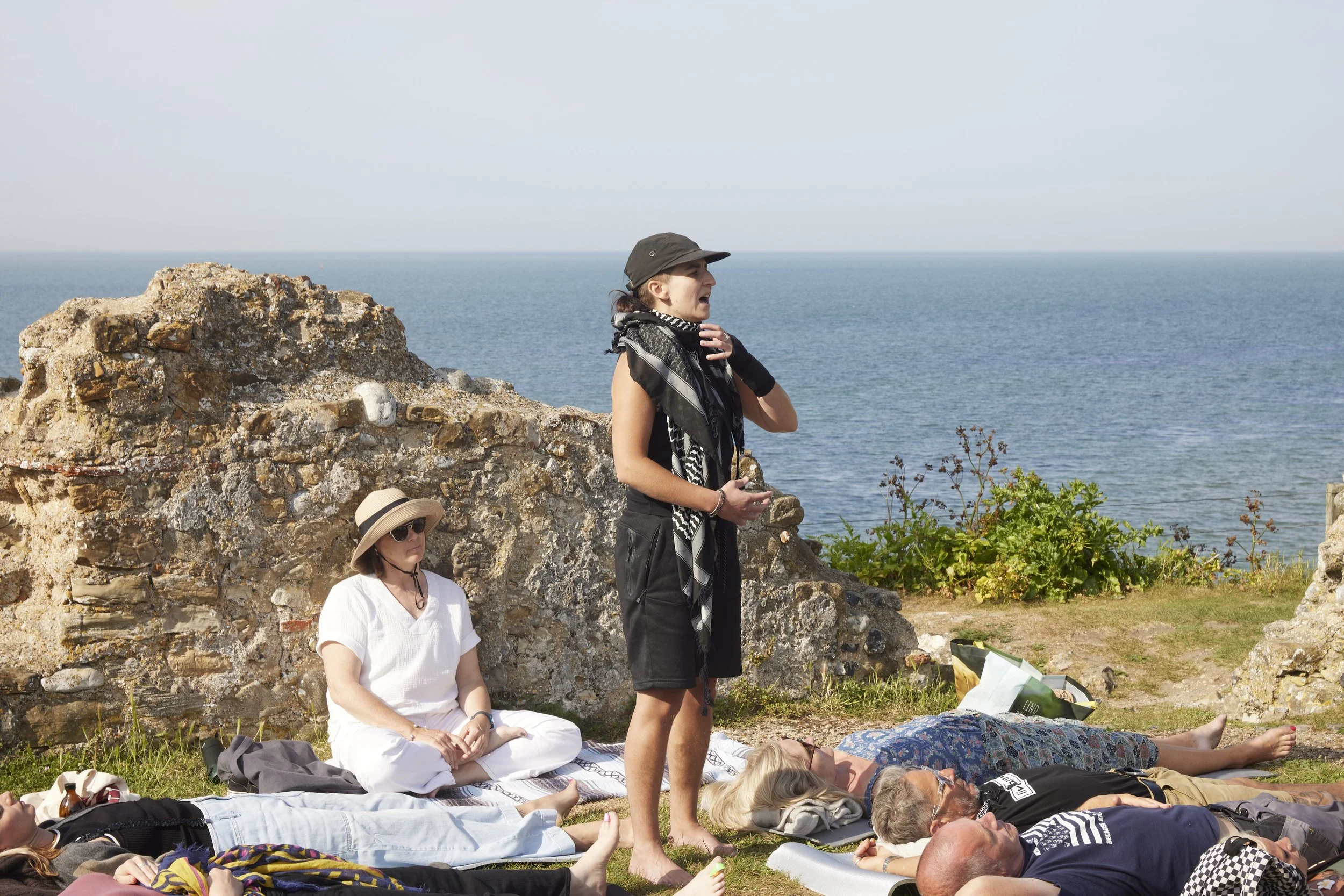
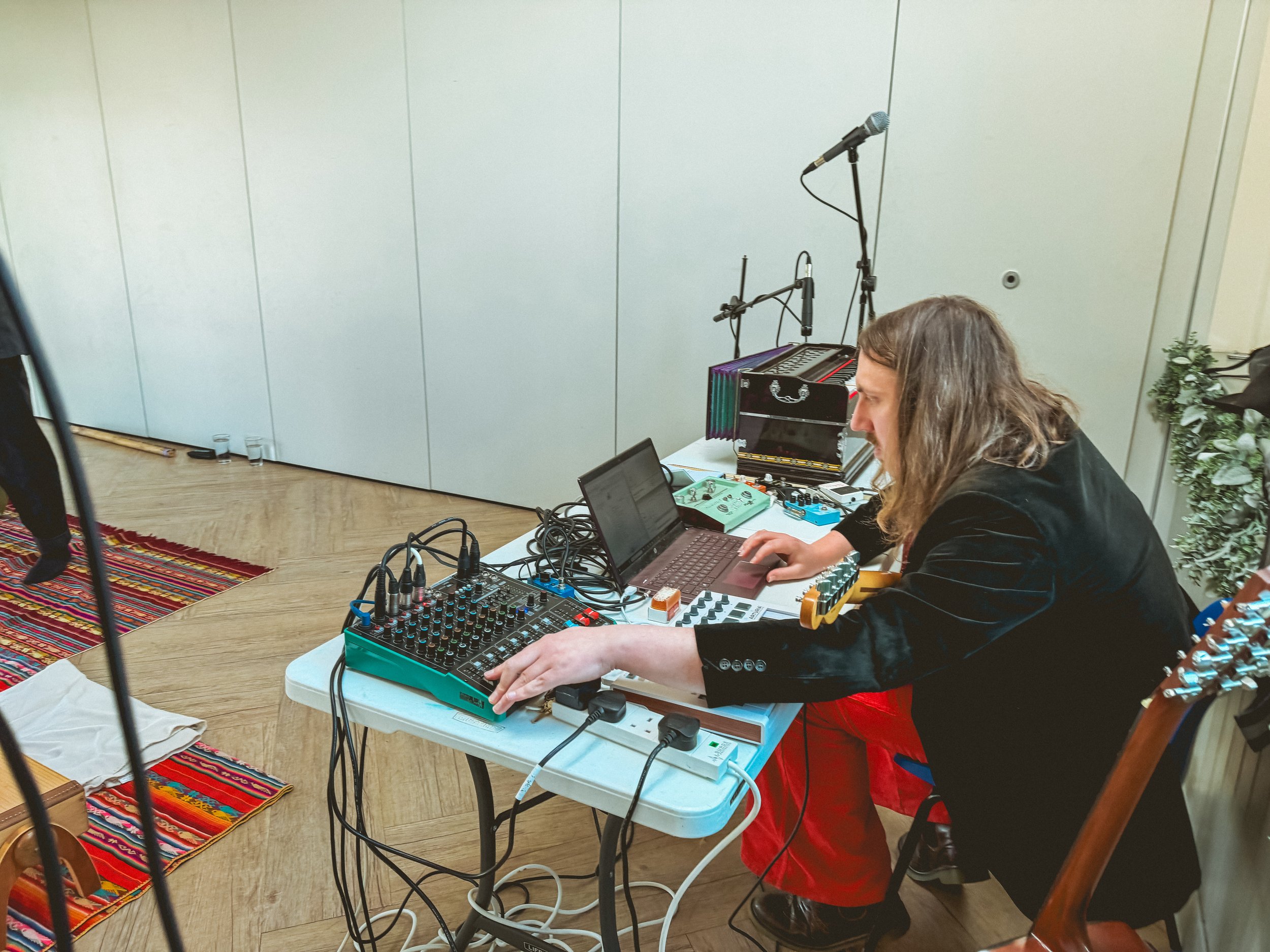
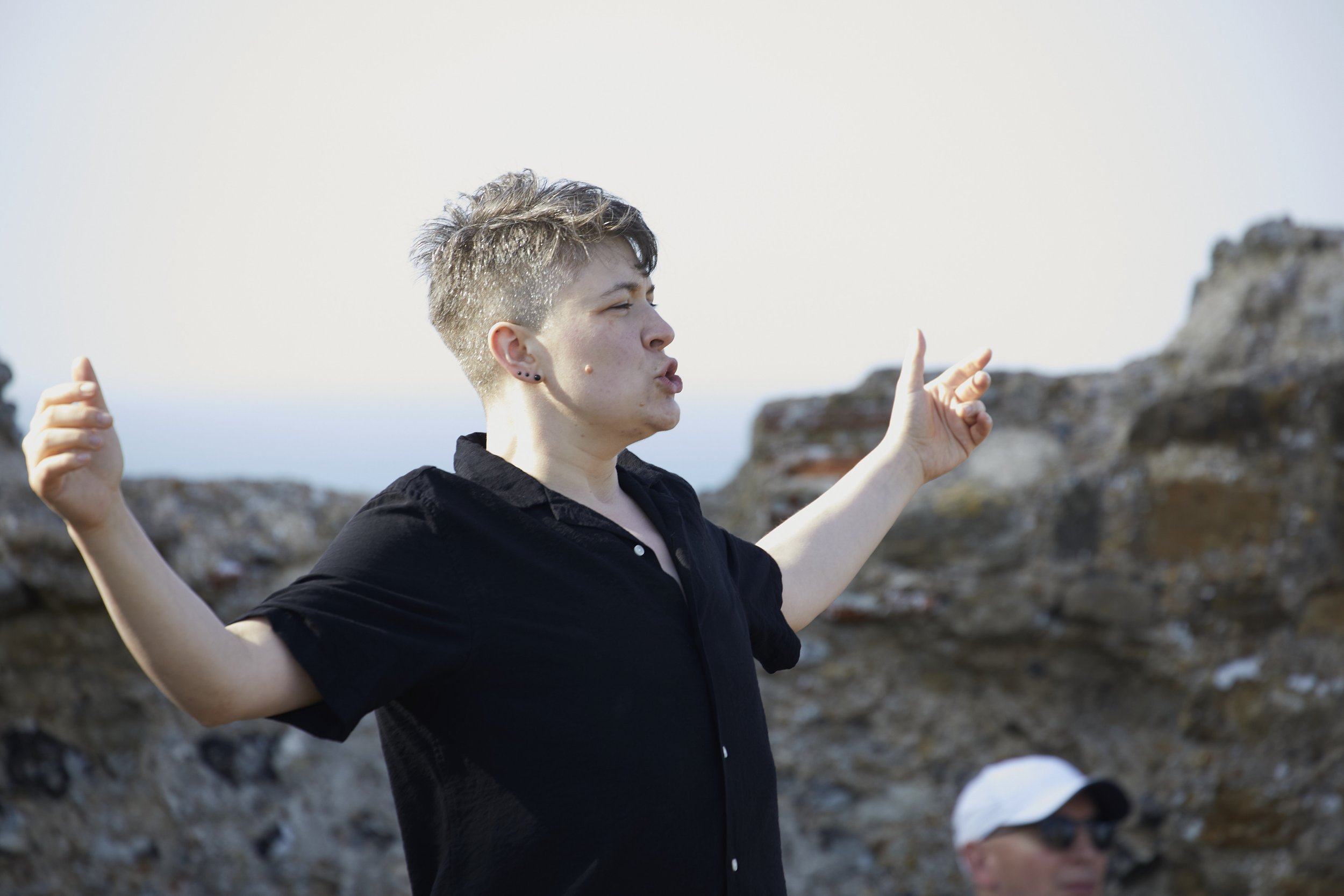
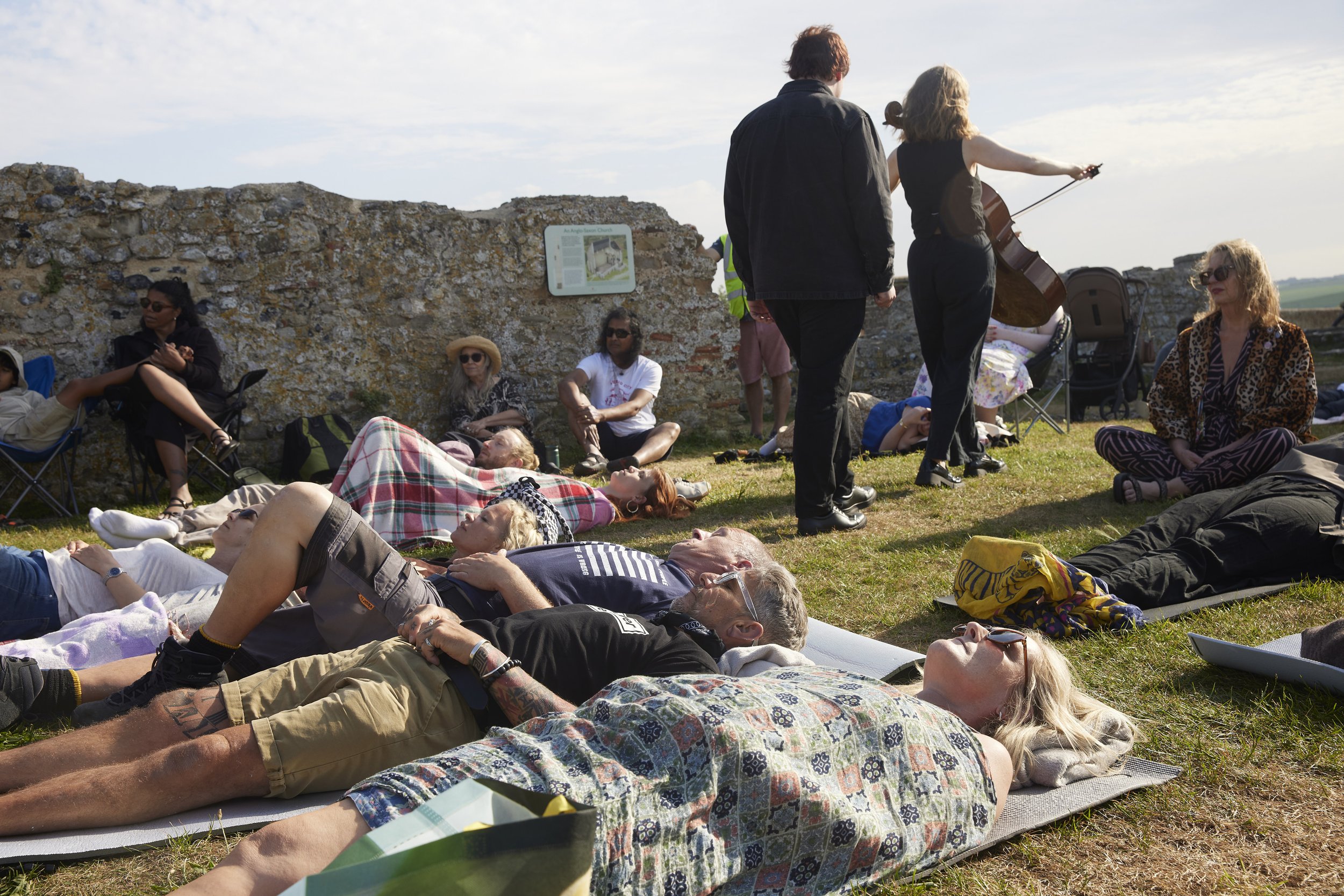
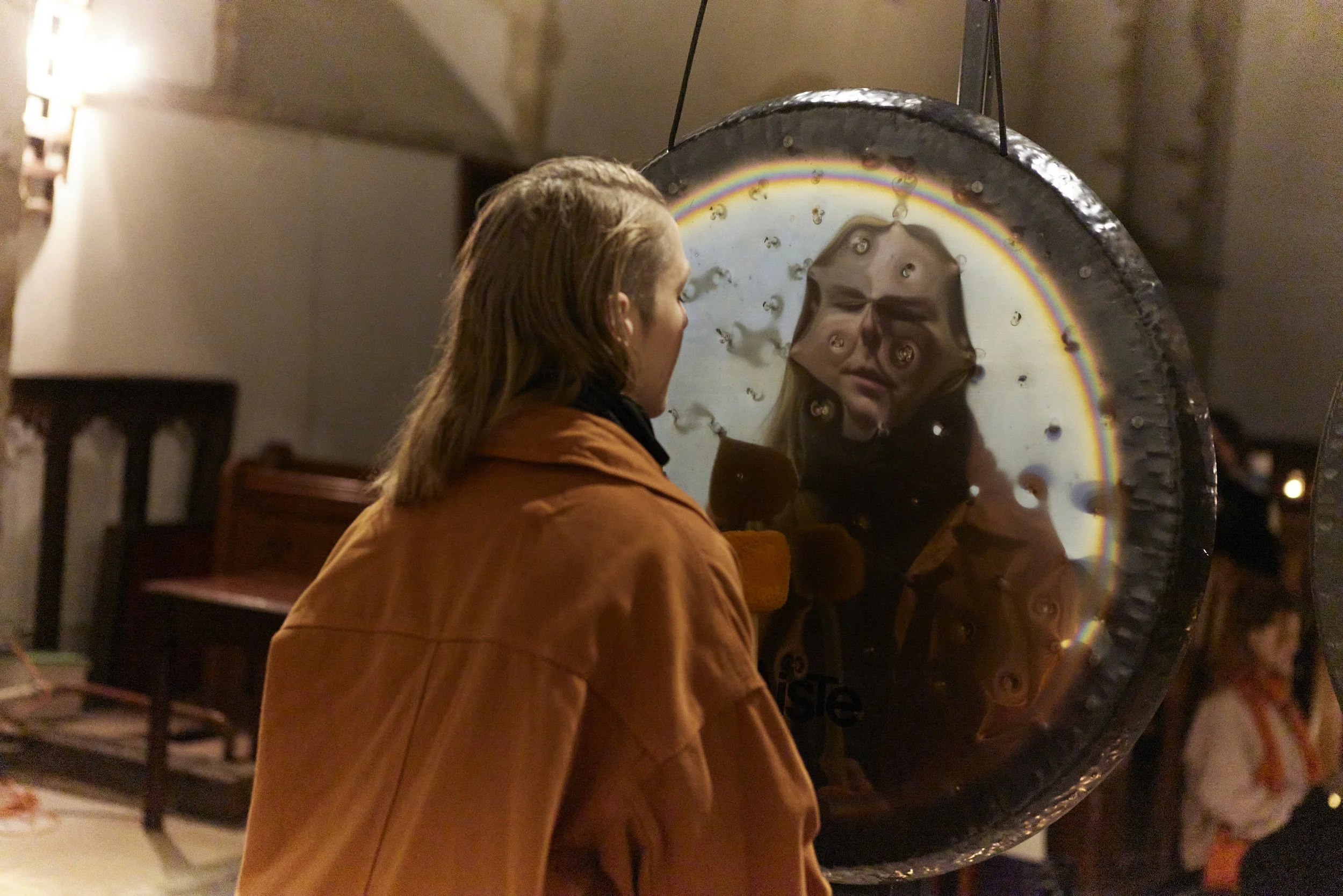
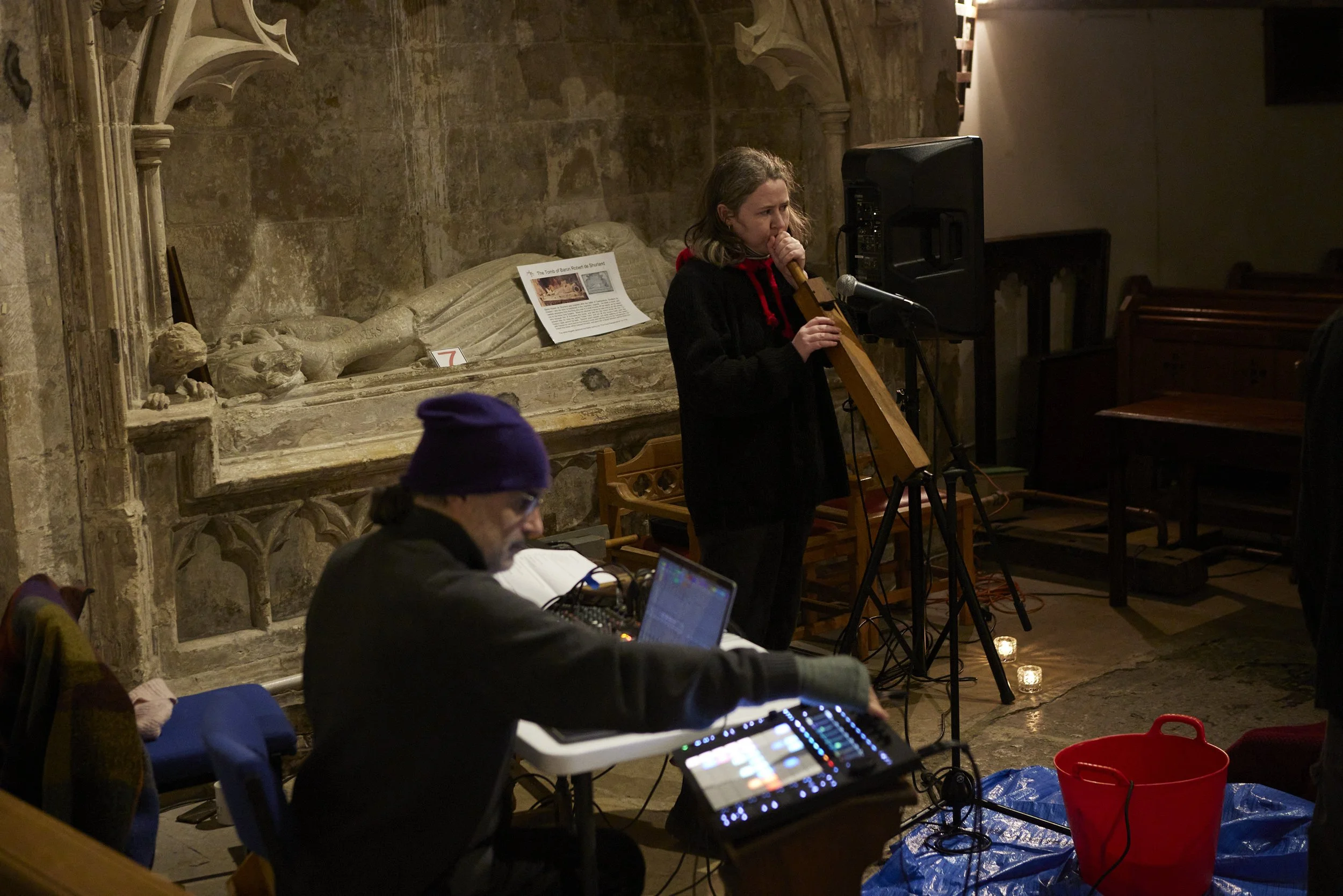
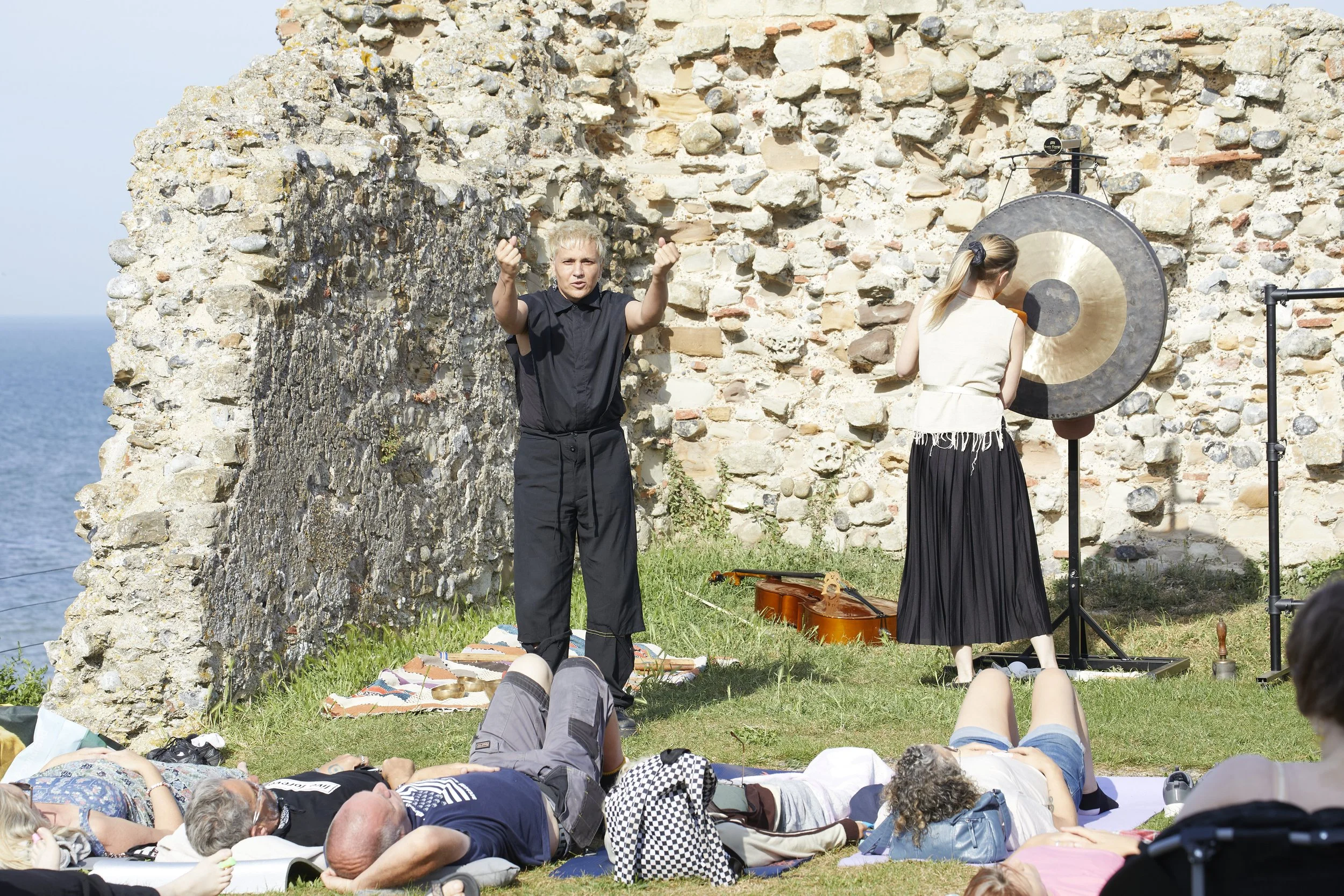
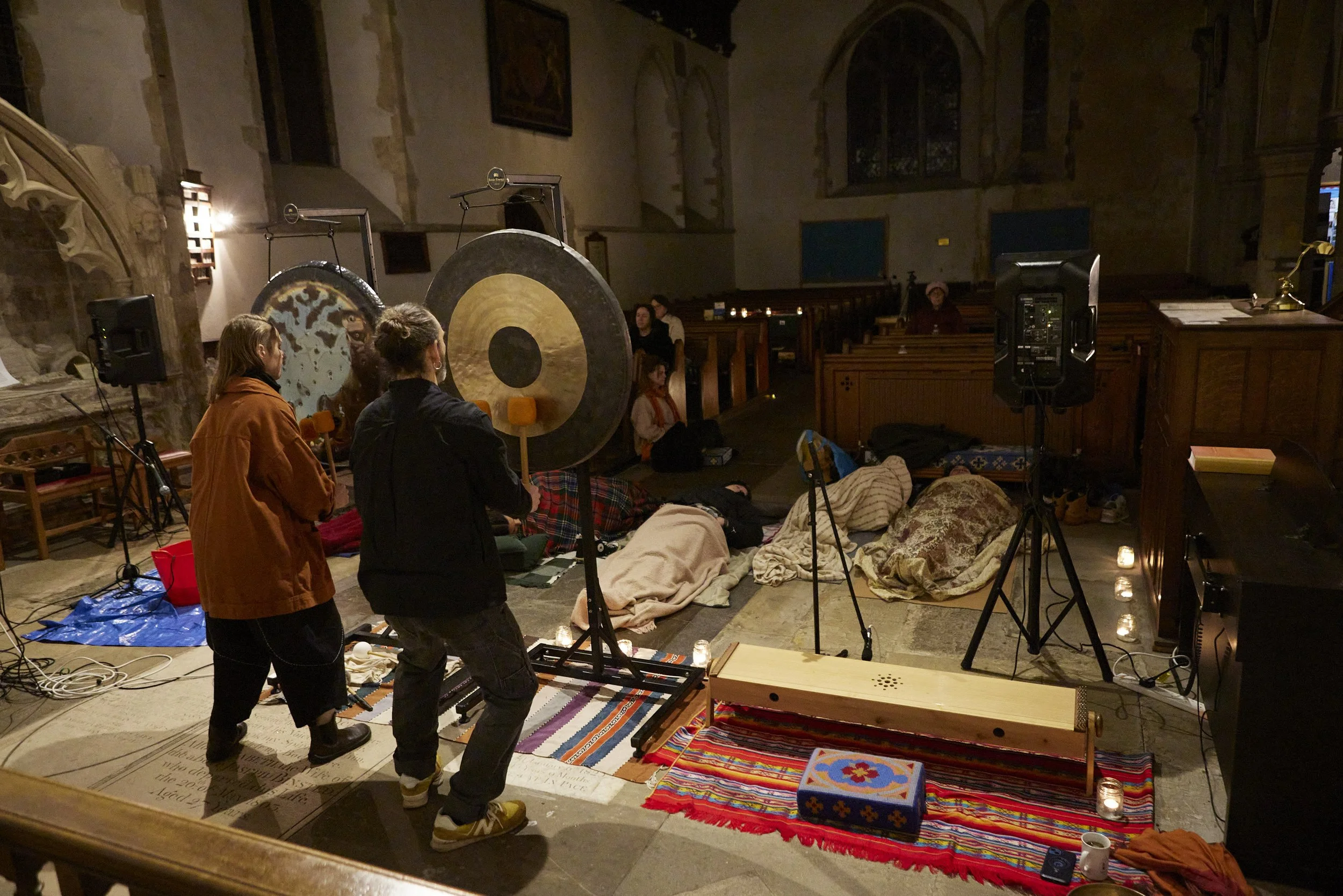
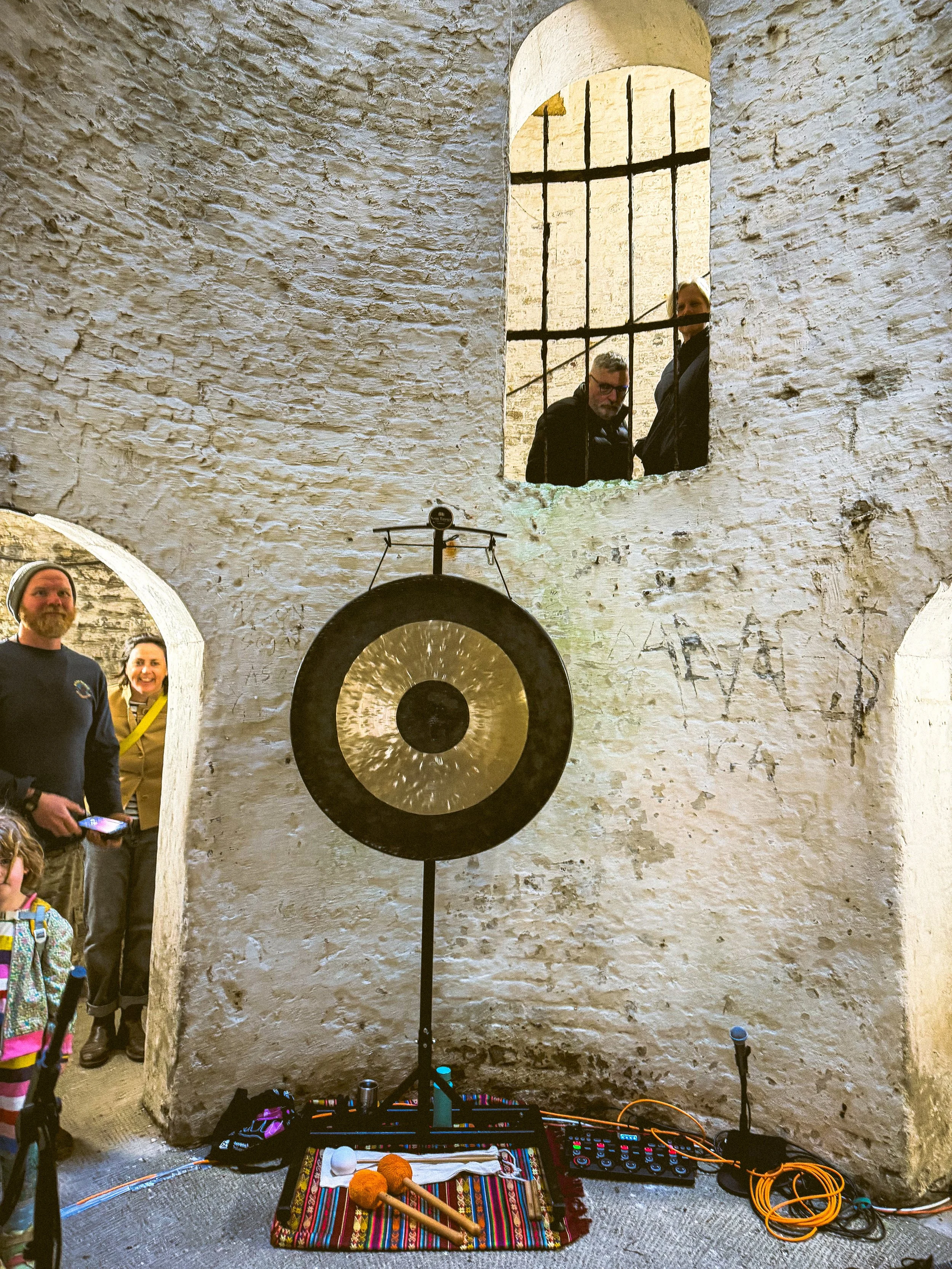
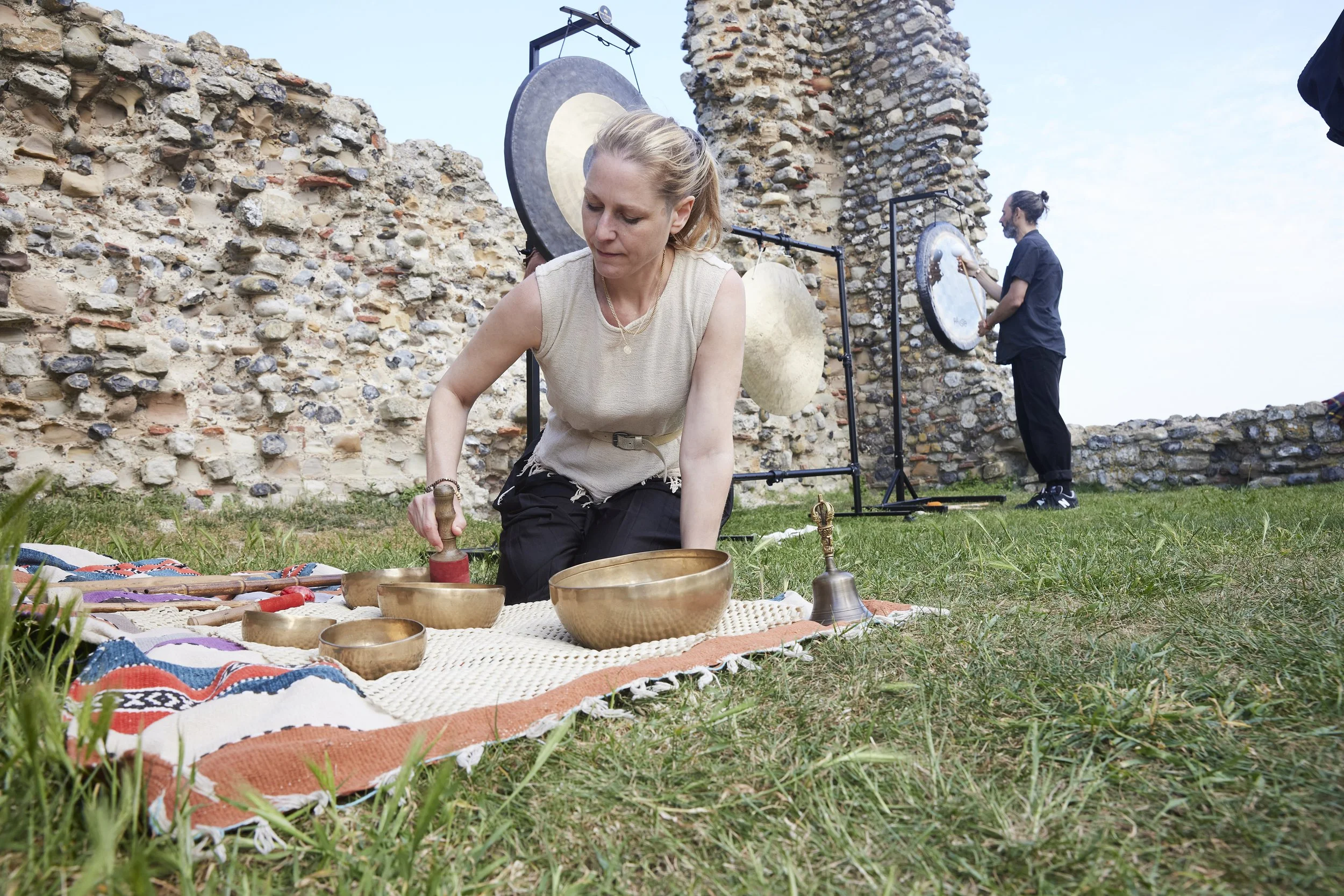
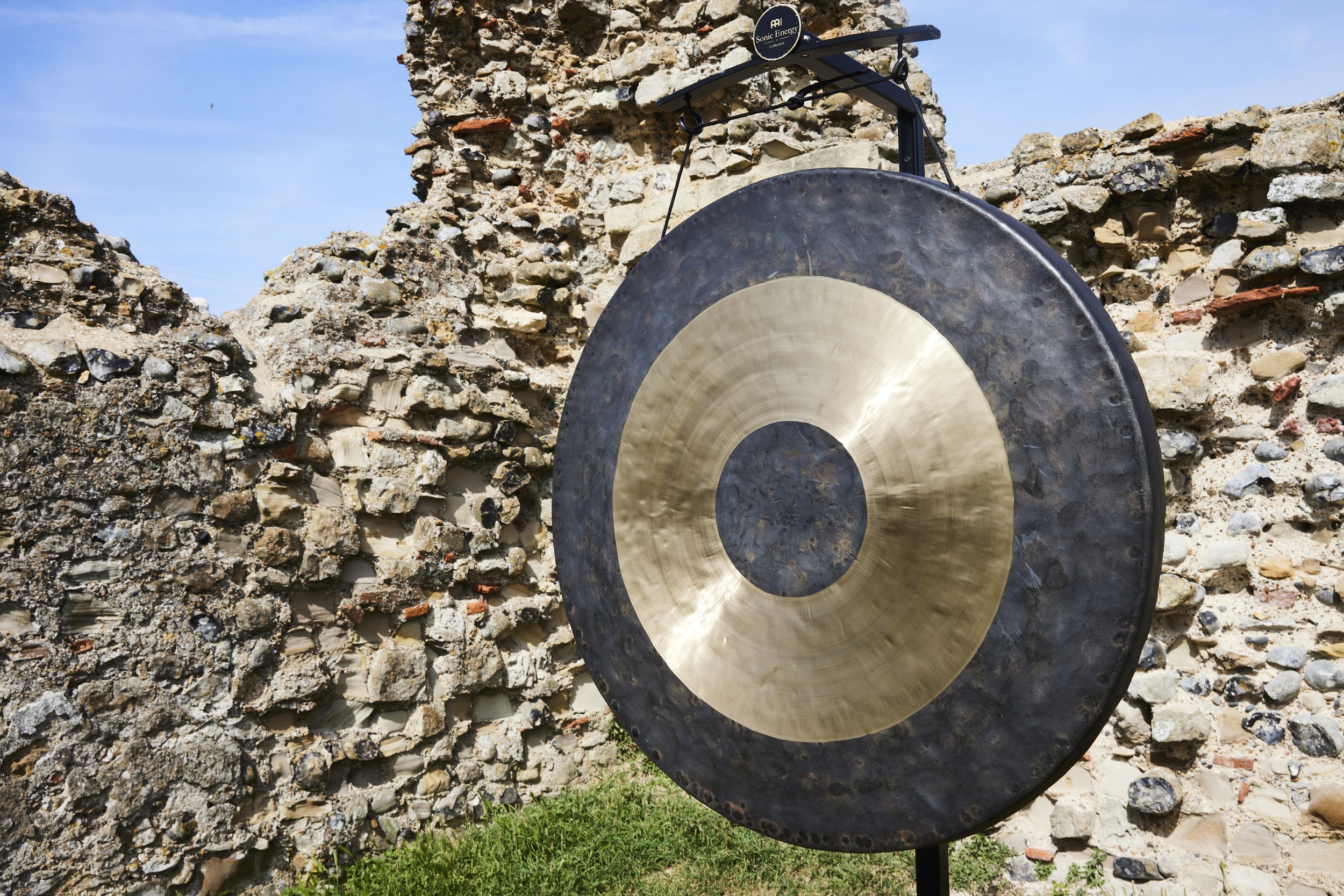
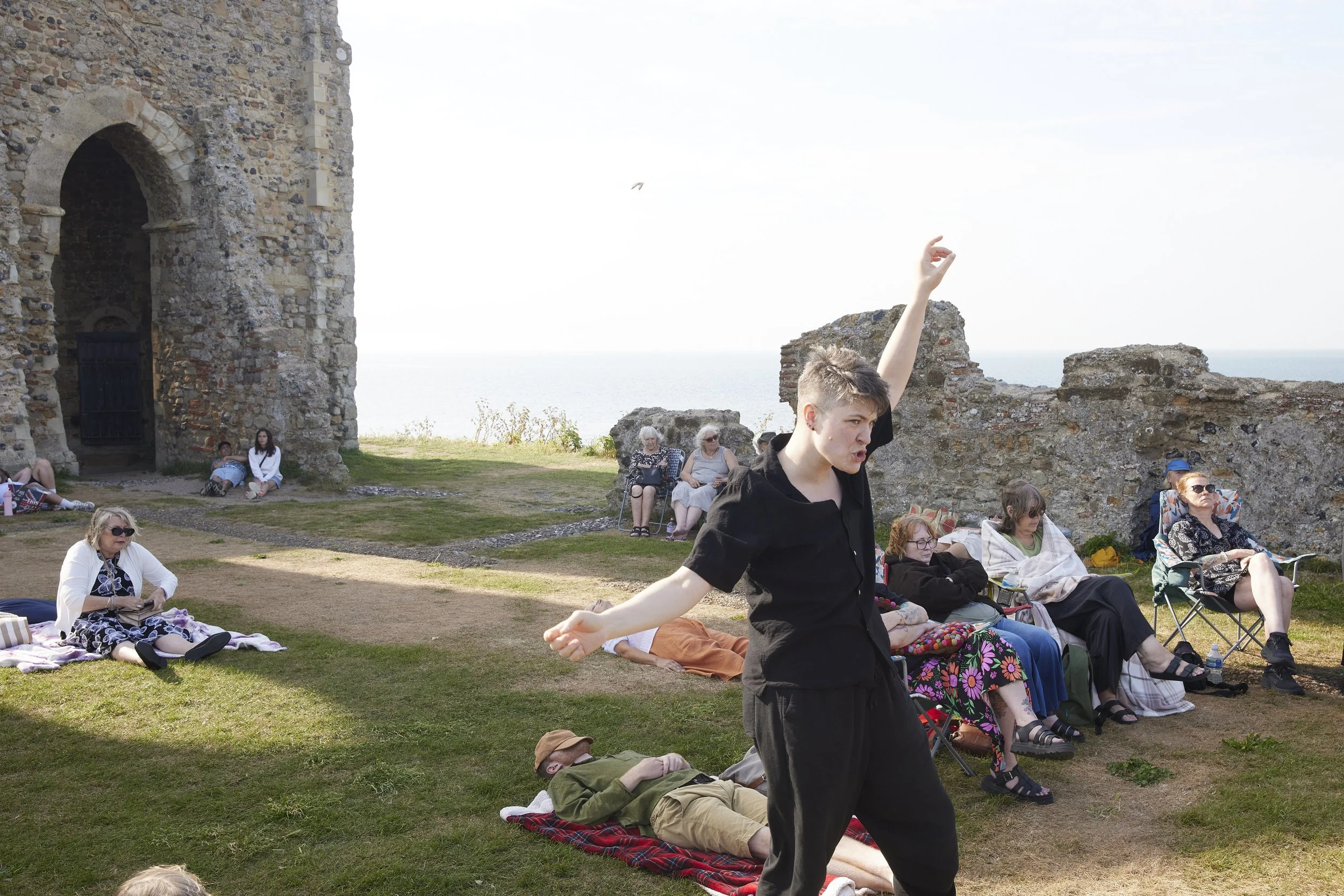
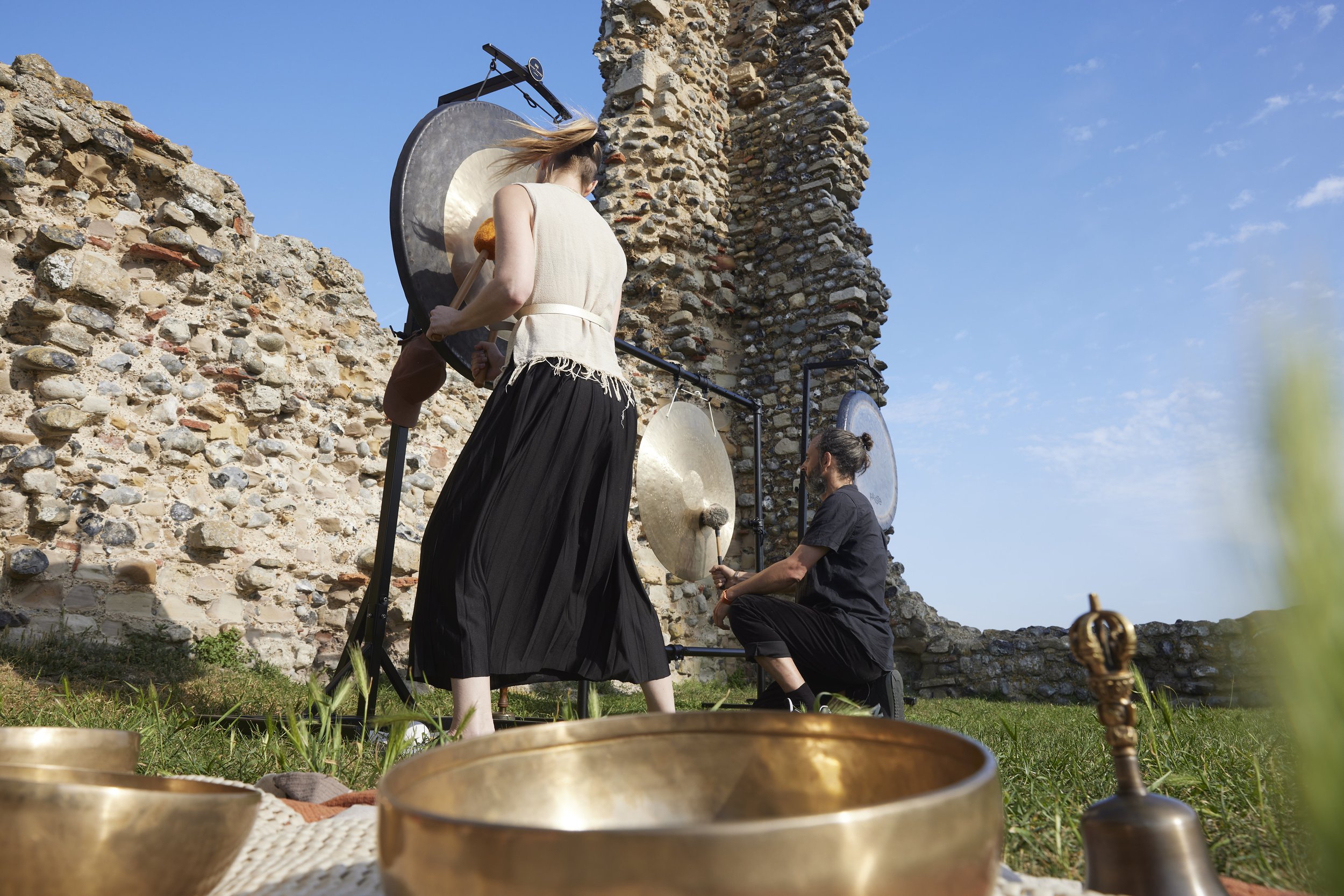
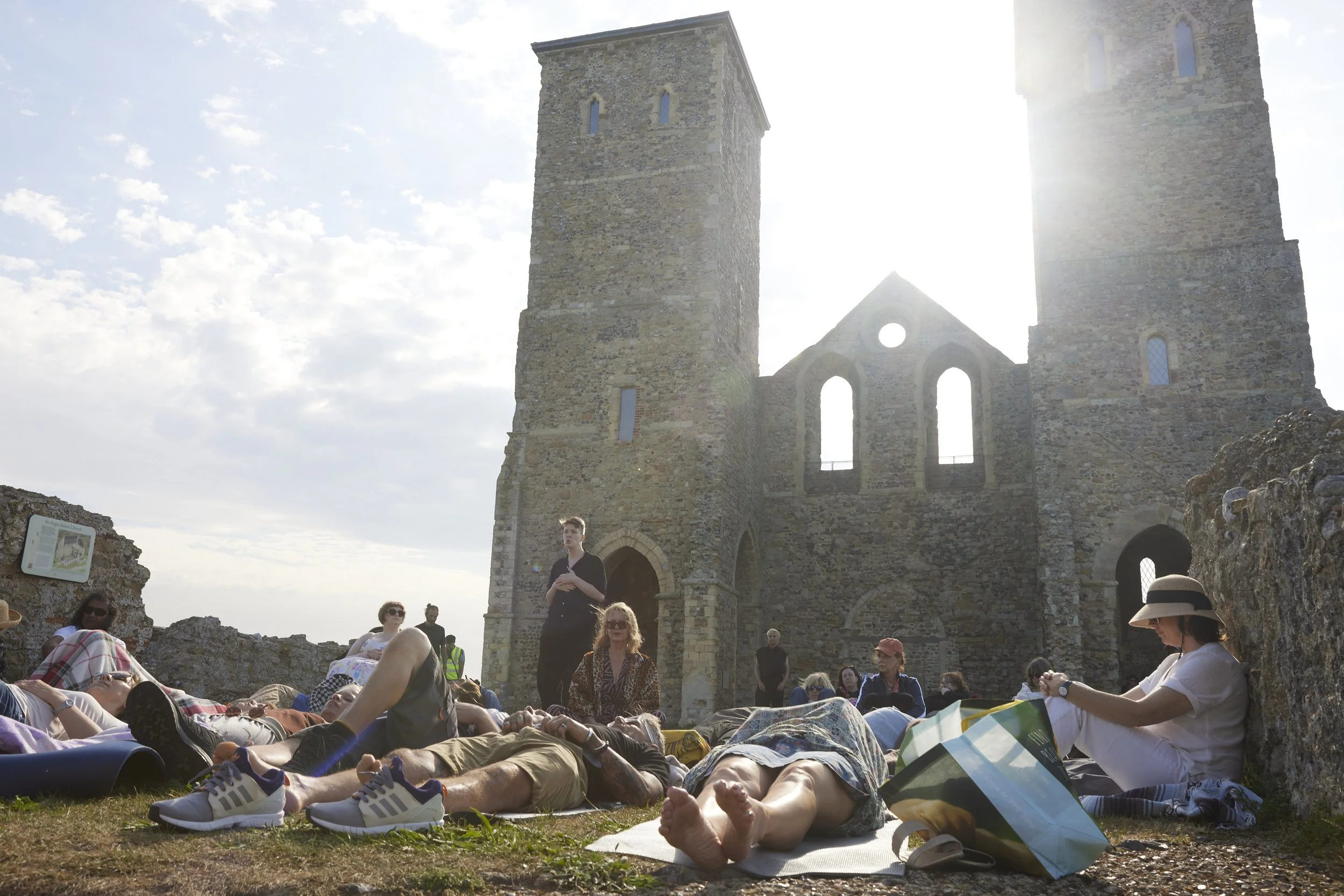
At the centre of each event was a collaborative live soundbath led by André and Sasha. Using gongs, singing bowls, percussion, voice, field recordings, acoustic instruments and electronic sound, the performances invited audiences to slow down, listen deeply and experience each location in a different way.
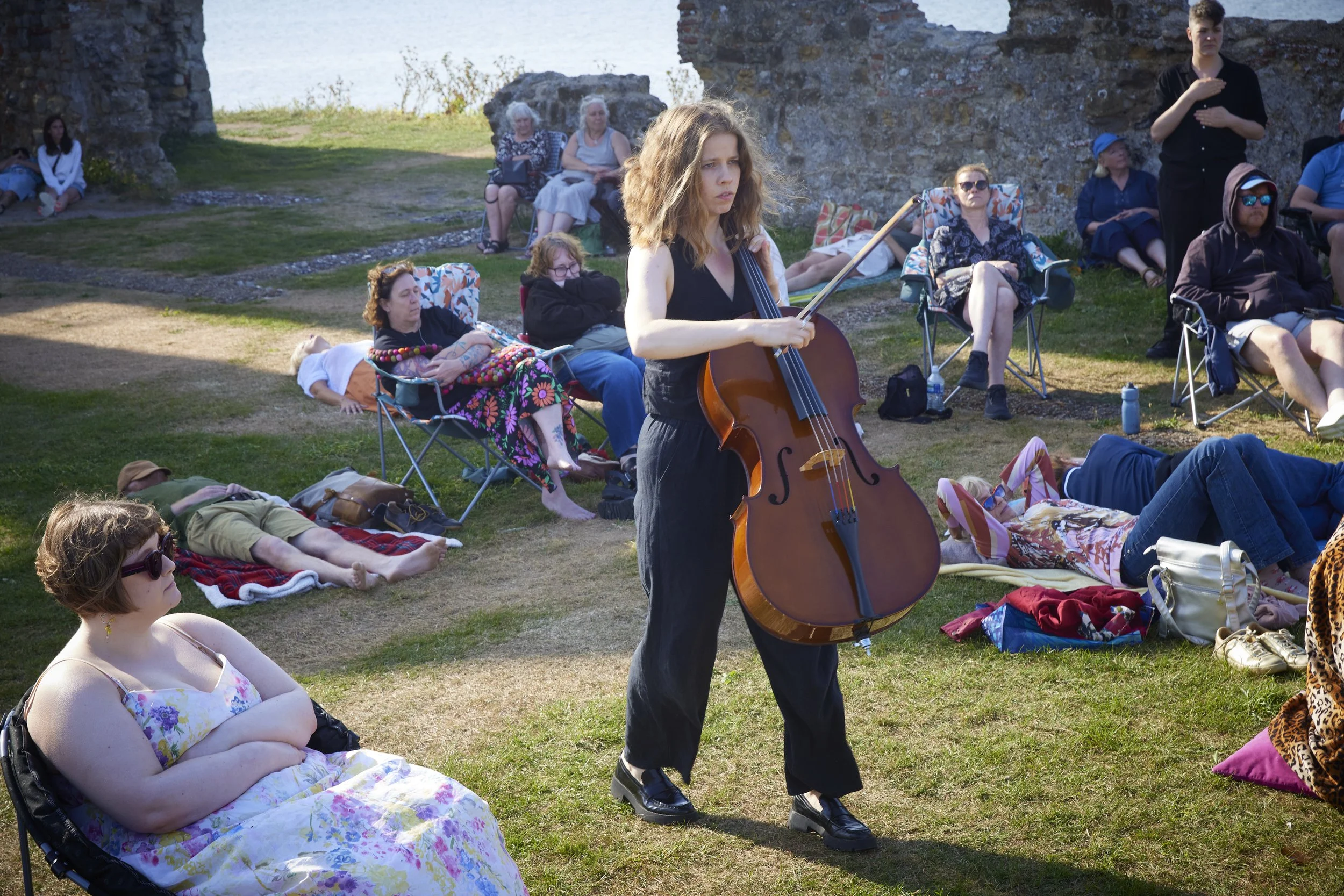
The project broadened the Sound Emergence format beyond music and sound art, bringing in visual art, performance, collective singing, historical research and guided walking. Each guest artist responded to the character, history or environment of a particular destination, ensuring that no two events were the same.
Three short artist residencies enabled returning collaborators from Church + Coast to develop more substantial site-responsive work. These involved multidisciplinary vocalist and performance artist Helen Davison and Chora at St Mary and St Eanswythe, musician and composer Greg Ireland at Kent Mining Museum, and transdisciplinary artist Ilā, joined by singers from London Contemporary Voices, at Rochester Cathedral.
Across the wider pilgrimage, participating artists included musicians, vocalists, composers, visual artists and sound artists working with practices ranging from harp and collective voice to experimental electronics, environmental sound and improvised performance.
These collaborations placed contemporary artistic practice in conversation with sacred architecture, social history, folklore, industry and landscape. They also gave artists paid opportunities to experiment outside conventional performance settings and introduce audiences to unfamiliar instruments and creative approaches.
Walking and listening
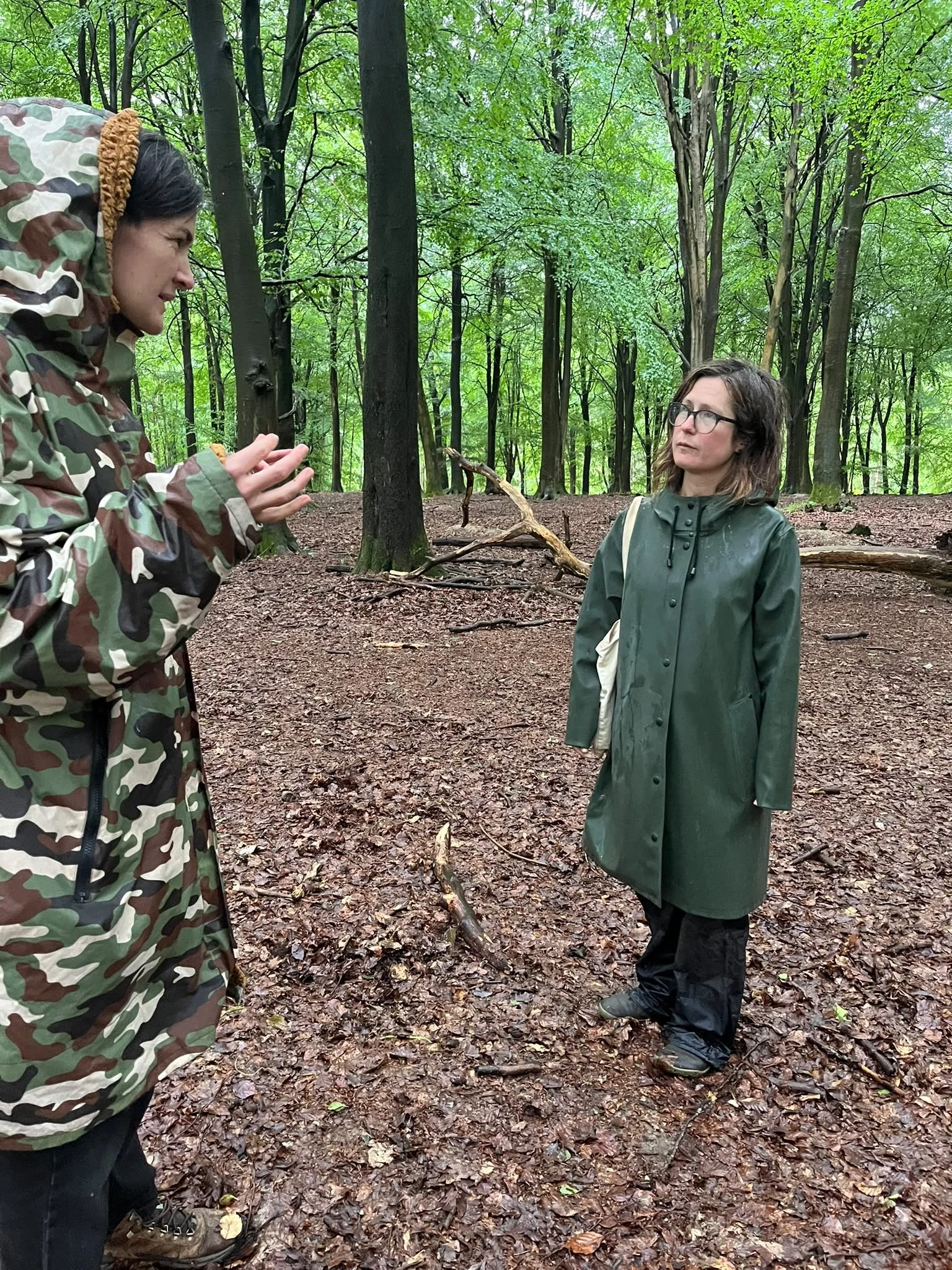
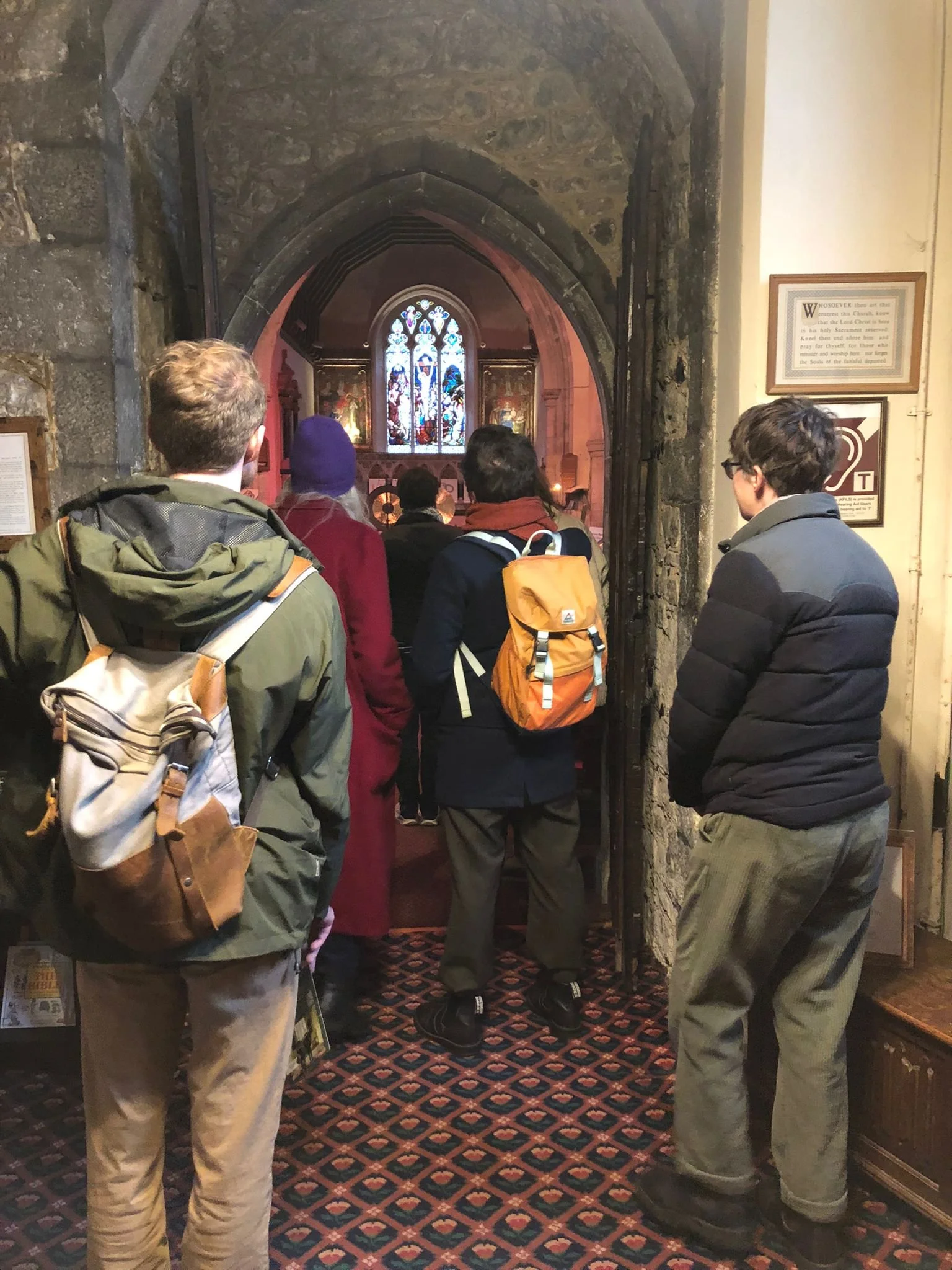
One of the project’s most successful developments was the introduction of guided sound walks. These took the experience beyond the event venue and encouraged participants to listen closely to the landscape, its natural sounds and the traces of human activity held within it.
Walking became a contemporary form of pilgrimage: a way of moving collectively through a place while making space for contemplation, conversation and discovery. The walks connected the project’s themes of migration and movement with the physical experience of travelling through Kent’s changing landscapes.
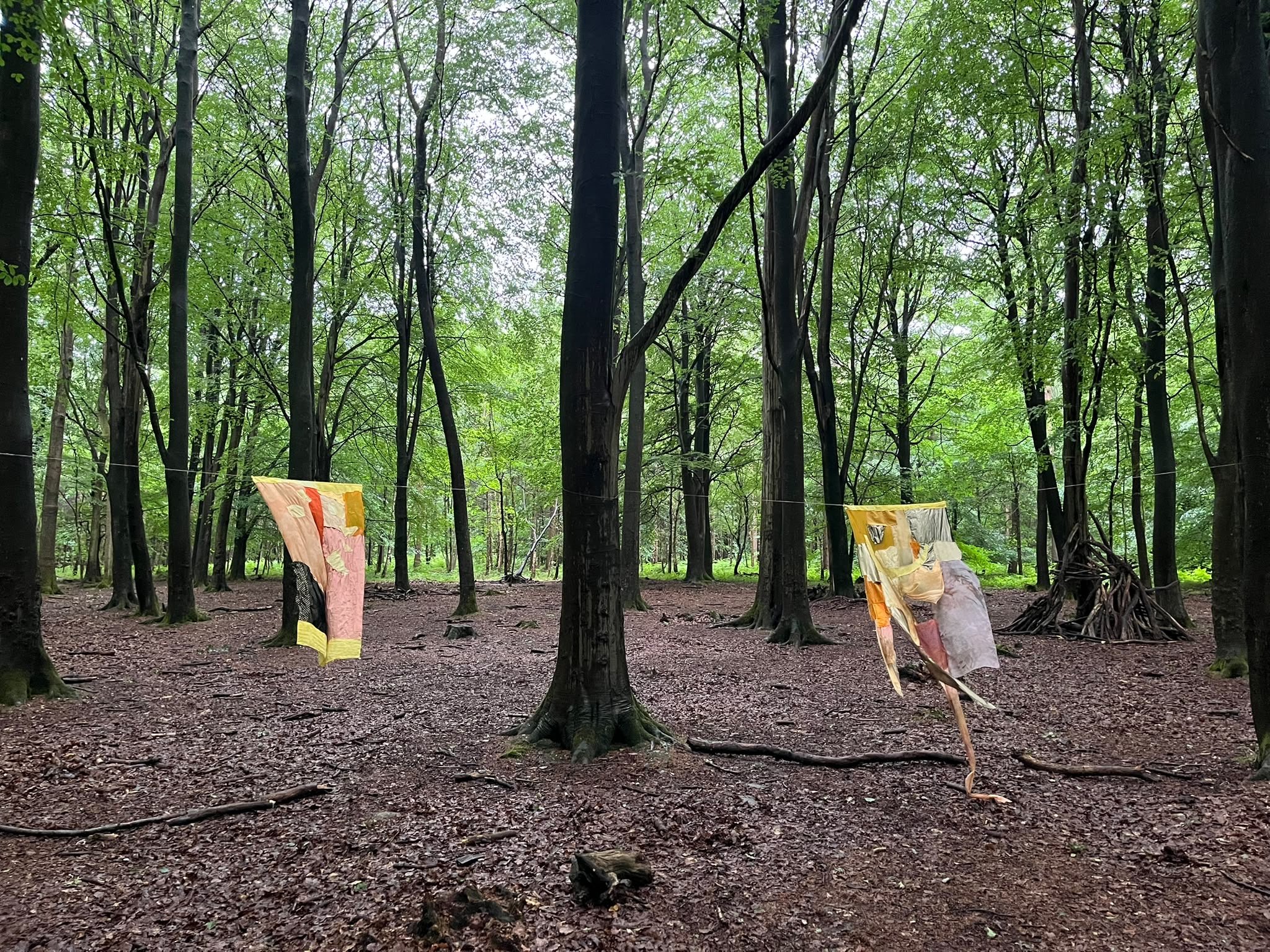
The final event in King’s Wood brought these ideas together through an evening journey into the Kent Downs, combining walking, site-responsive artistic encounters and a soundbath beneath the trees.
Audience responses showed that this mixture of elements captured people’s imagination and created a particularly strong connection with the project’s central themes:
“I really liked the mix of elements, soundbath, walk and history.”
The success of the sound walks has encouraged And Gather to continue developing work that combines listening, walking, storytelling and place.
Heritage and place
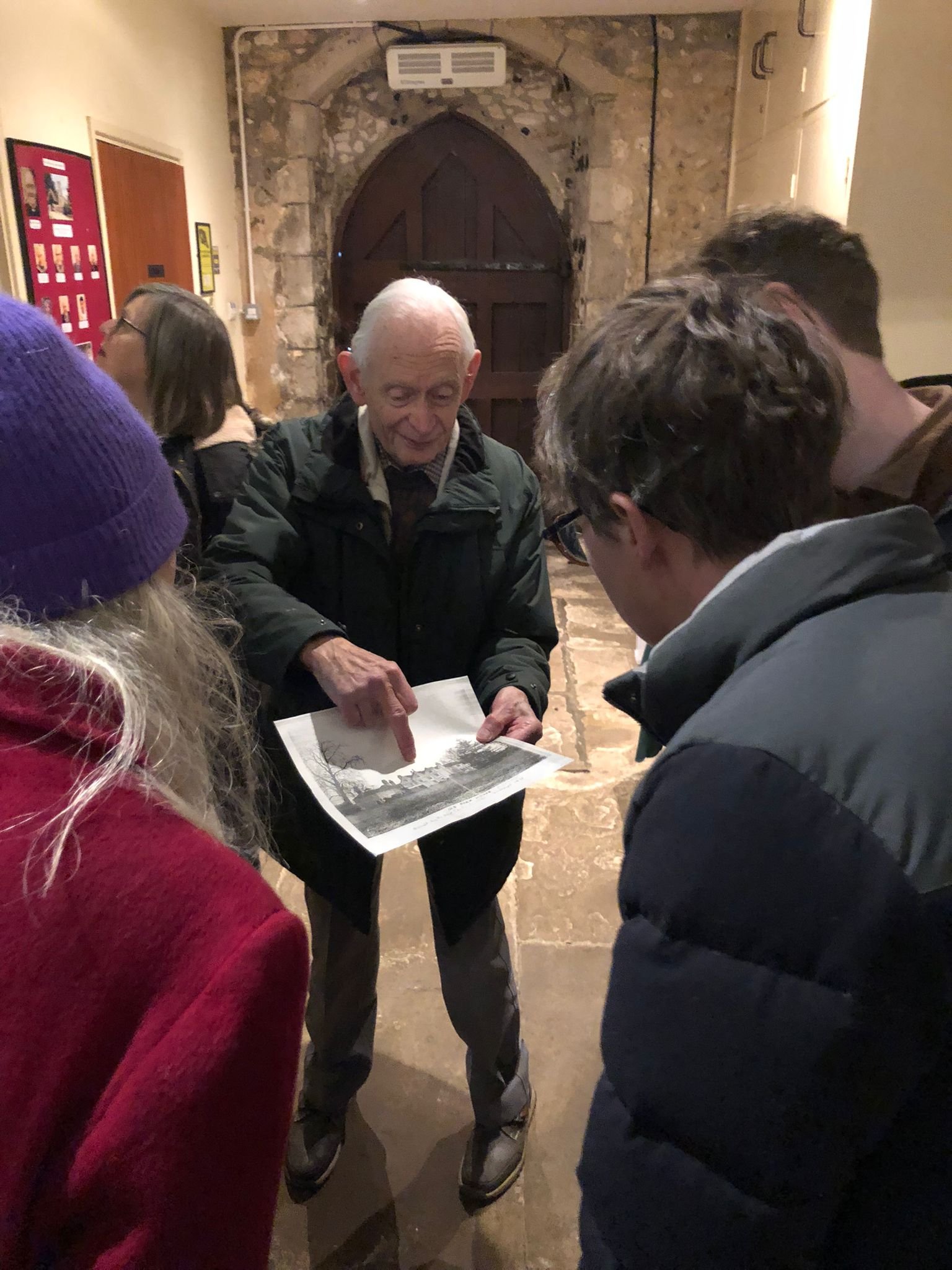
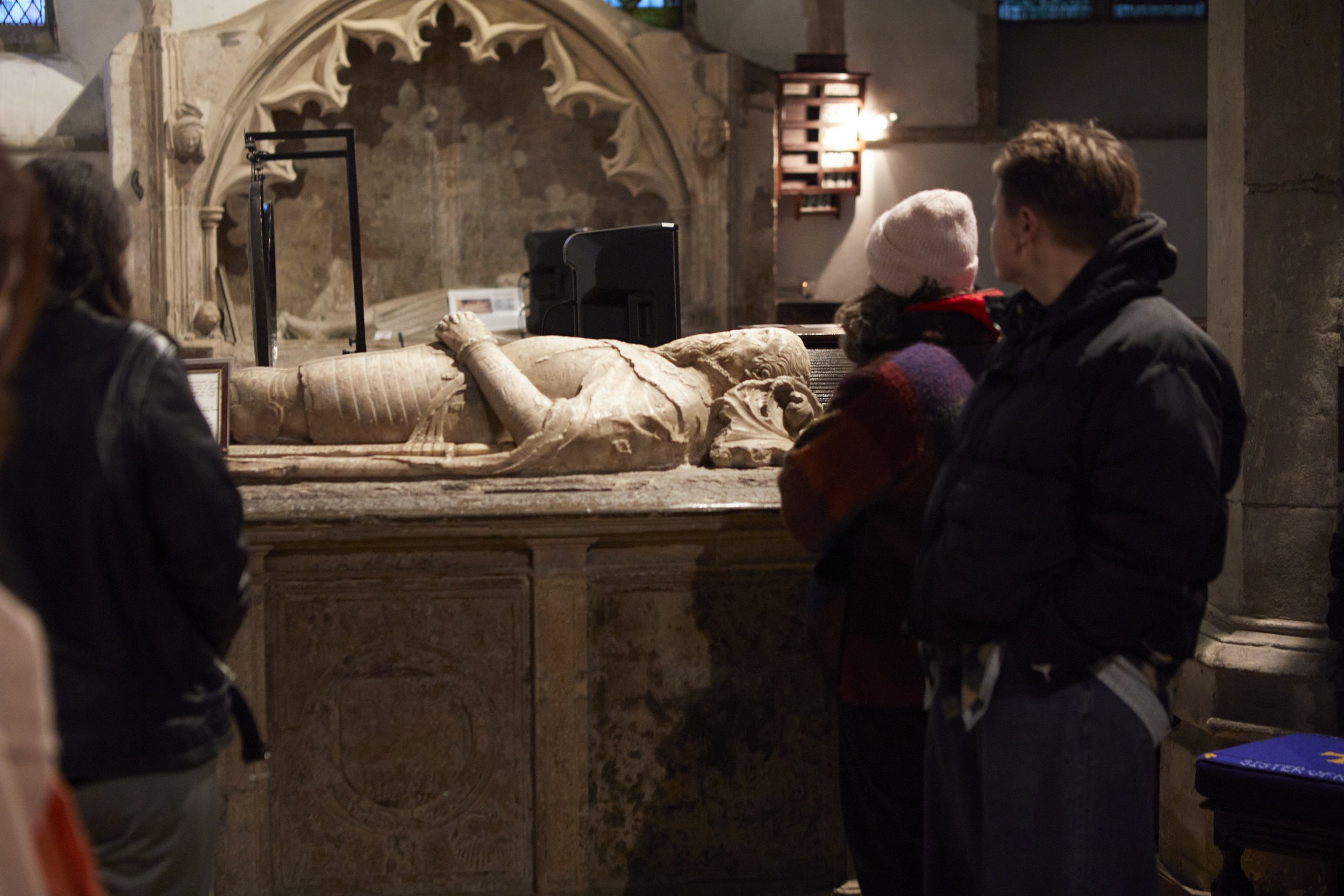
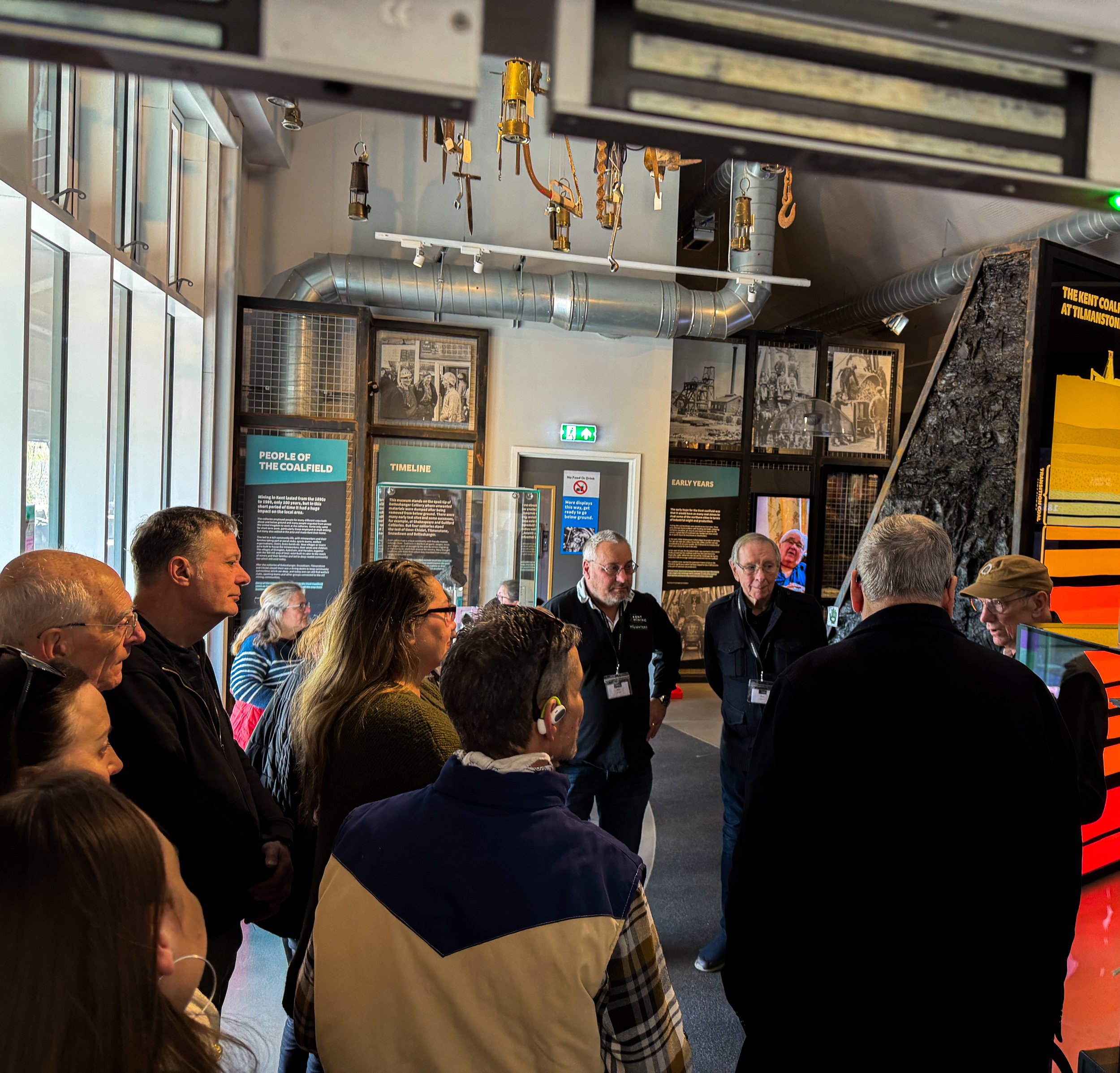
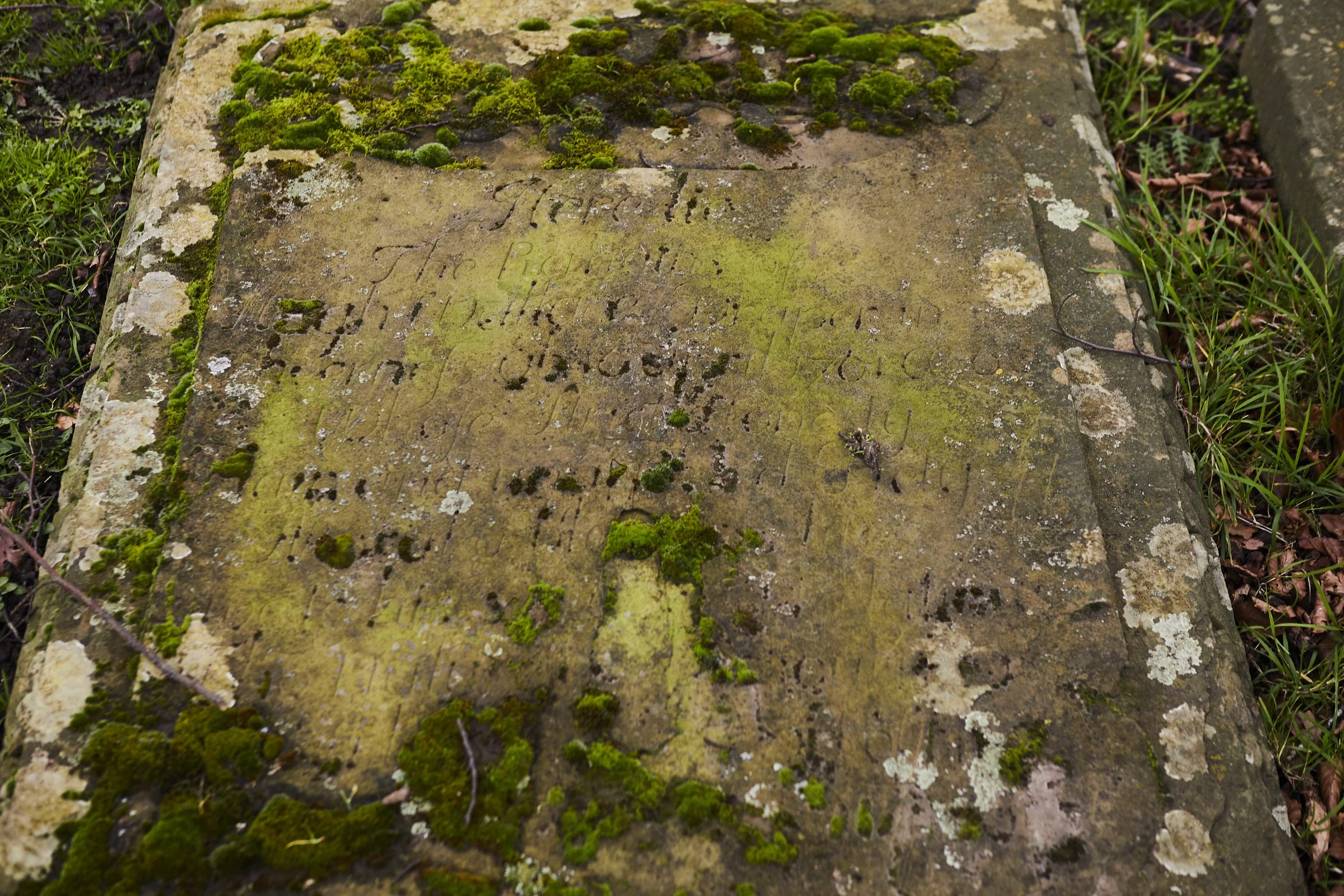
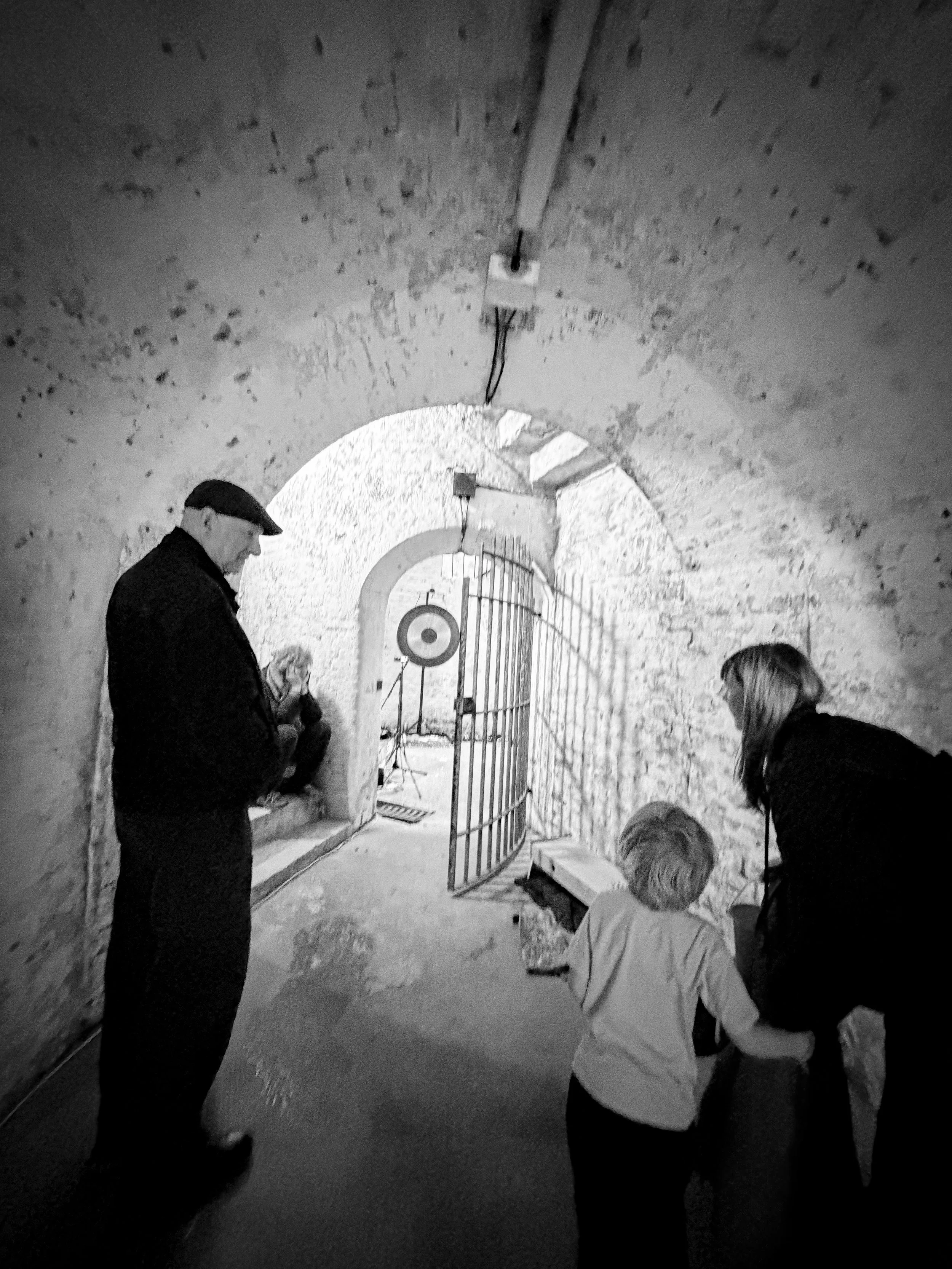
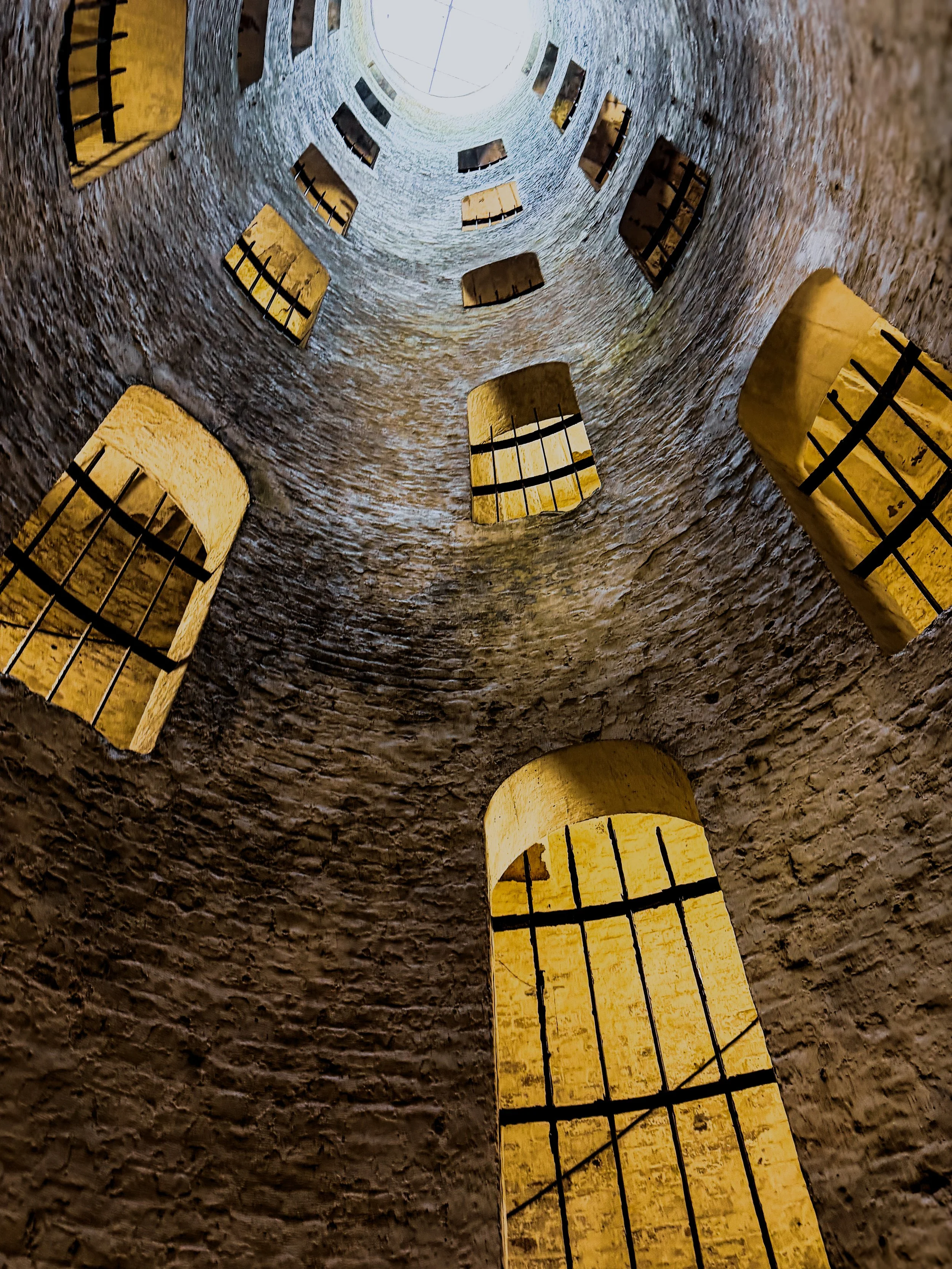
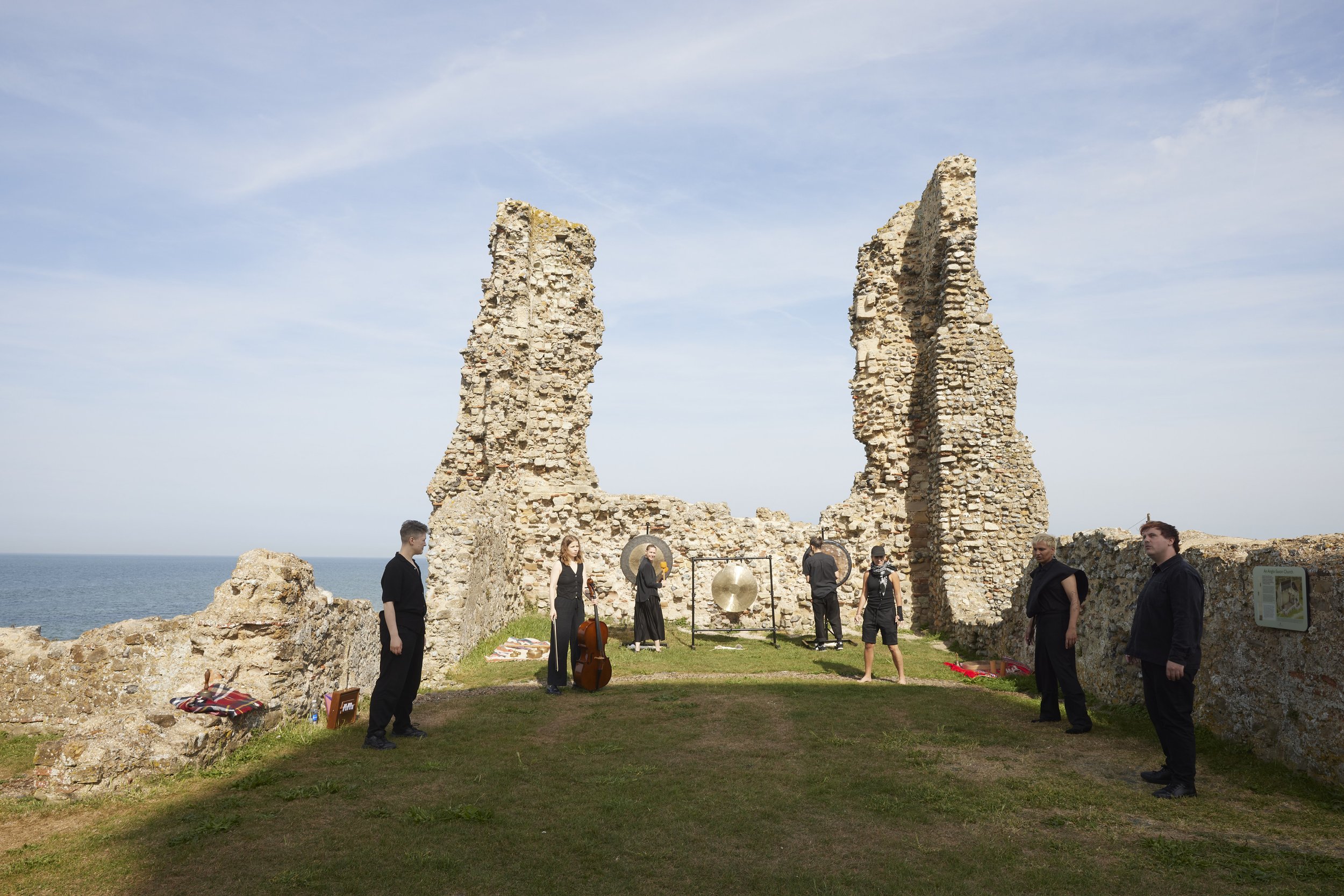
Creative tours and interpretation introduced audiences to the history and significance of each destination. The programme explored medieval pilgrimage and hospitality at Maison Dieu; early Christianity at St Martin’s Church and Minster Abbey; Kent’s coal-mining heritage at Betteshanger; coastal defence at the Grand Shaft; and the changing shoreline represented by the ruined towers at Reculver.
Rather than treating heritage as a fixed account of the past, This Place Meant considered how places are continually reinterpreted. Its themes included international movement, barriers and borders, changing coastlines, class and labour, faith, sanctuary, displacement and the different relationships that communities have with the land.
The historic settings enriched the artistic experiences, while the contemporary performances invited audiences to encounter familiar buildings and landscapes from new perspectives. As one project partner from Dover District Council reflected:
“This was wonderful, we’d love you to come and do it again.”

Access and community
This Place Meant was designed to welcome people who might not usually attend either contemporary arts events or conventional heritage activities. Events were offered free or on a low-cost, sliding-scale basis, and no previous experience of soundbaths, meditation or contemporary art was needed.
The project worked with six key organisational and heritage partners, including Dover District Council, three church benefices, English Heritage and Routestock CIC. These relationships helped the programme reach different places and communities across Kent while supporting access to distinctive and sometimes unusual sites.
Time for conversation, workshops and informal participation helped turn the events into social gatherings rather than conventional performances. Participants could meet artists, learn about their practice, explore instruments and creative techniques, and share their own responses to each location.
The strength of this connection produced an unexpected outcome: after attending the first events as audience members, three people subsequently volunteered during later stages of the pilgrimage. This demonstrated a desire not only to experience the work but to become part of the community developing around it.
Impact
This Place Meant was Sound Emergence and And Gather’s most ambitious programme to date:
More than 550 audience members
17 participating artists
11 locations across Kent
10 locations new to Sound Emergence
Six key organisational and heritage partnerships
Three artist residencies
New activity incorporating visual art, guided walking and outdoor performance
New volunteers recruited directly from the project’s audiences
Feedback from audiences, artists and partners was overwhelmingly positive. Participants particularly valued the combination of live sound, historical discovery, unusual locations and time for reflection.
Artists responded positively to the collaborative process and the opportunity to create work in dialogue with place. One of the residencies at Kent Mining Museum also developed into an ongoing creative relationship extending beyond the funded project.
The programme demonstrated a growing appetite for work that brings innovative music and arts practice together with folk culture, wellbeing and heritage. It also showed how contemplative experiences can help people connect not only with themselves and one another, but with the histories and landscapes around them.
Legacy
This Place Meant represented a significant step forward from Church + Coast. It expanded the geographic reach, artistic ambition and collaborative nature of Sound Emergence’s work while testing new formats, including artist residencies, sound walks, outdoor performance and multidisciplinary commissions.
The scale of the project developed And Gather’s organisational capacity and confidence. It established new relationships with local authorities, major heritage organisations, churches, venues and community partners, while deepening existing connections across Kent.
The project also demonstrated the value of giving artists time to research, collaborate and respond creatively to particular places. The residencies, guided walks and site-responsive collaborations developed through This Place Meant will directly inform And Gather’s future commissions and events.
A major direct legacy will be FolkeFest 2027, the relaunch of Folkestone Contemporary Folk Festival under And Gather CIC. The festival will bring together the artistic relationships, community networks and themes developed through the original FolkeFest, Church + Coast and This Place Meant - including place and identity, pilgrimage and migration, folklore, landscape, belonging and our relationship with the natural environment.
FolkeFest 2027 will provide a larger public platform for this developing body of work, connecting traditional and contemporary folk music with immersive sound, visual art, performance, film, walking, workshops and participatory experiences. Artists and collaborators developed through Church + Coast and This Place Meant will contribute to the festival, while the projects’ partnerships and learning will help And Gather reach new audiences and create activity across Folkestone’s venues, heritage sites and public spaces.
This Place Meant therefore forms an important bridge between Sound Emergence’s contemplative, place-responsive practice and And Gather’s broader multidisciplinary programme. Its model of contemporary pilgrimage - rooted not in a single faith or fixed destination, but in curiosity, deep listening and the meanings people create by gathering together in a place - will become one of the foundations of FolkeFest 2027.
Read more about Folkestone Contemporary Folk Festival (FolkeFest).